PRC Holds Webinar marking 104 years since the Balfour Declaration
The Palestinian Return Centre (PRC) hosted a webinar marking 104 years since the Balfour Declaration, a pledge made on the 2nd of November 1917. This pledge was a betrayal of the Palestinians, and would ultimately culminate in al-Nakba- the Catastrophe.
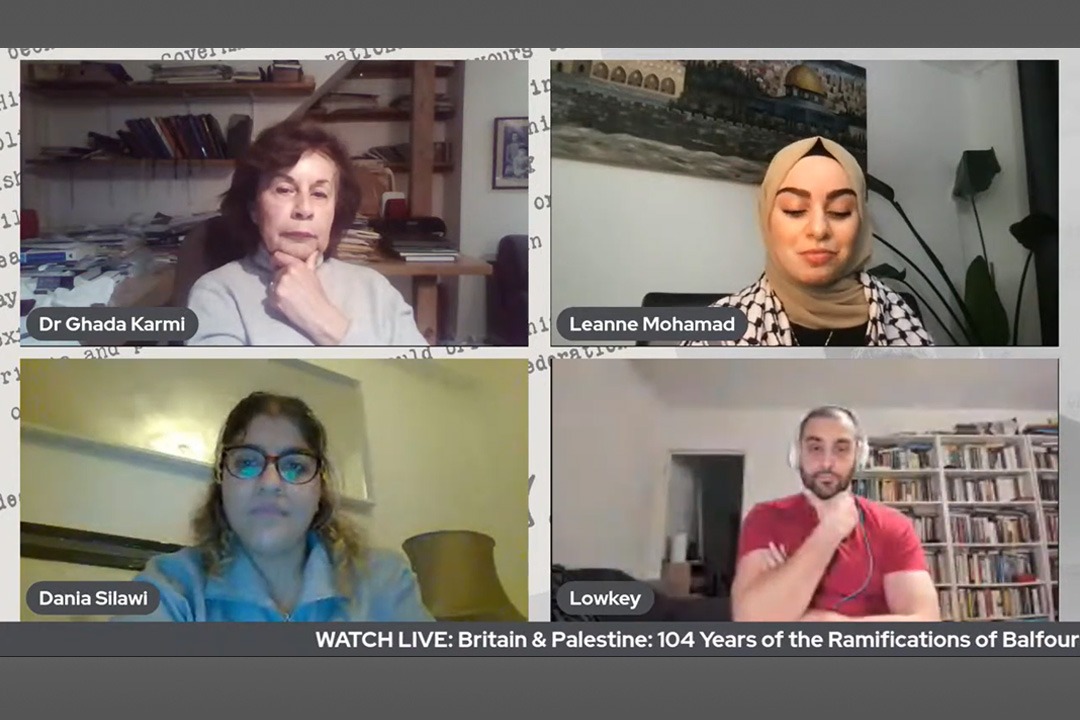
The webinar, titled “Britain & Palestine: 104 Years since the Ramifications of Balfour”, featured three speakers: Leanne Mohammed, Lowkey, and Dr Ghada Karmi. The webinar was moderated by Dania Silawi who stated that the discussion would centre on the Declaration’s persisting legacy of human rights violations against the Palestinians.
The first speaker, Leanne Mohammed, was introduced as a British-Palestinian, final year student at King’s College London. Mohammed has an impressive portfolio of public speaking performances such as winning the UK Regional Redbridge Speakout Challenge in 2016, speaking at the university conferences and delivering a speech in parliament.
Mohammed’s segment began with a visceral disavowal of the Declaration, she called it “a day that weighs heavily on every Palestinians heart and the reason why we are resisting today”. She stated that the Declaration was a colonial one which “paved the way for the creation of the settler colonial state of Israel.” She raised two questions, first she asked “what right did Britain have to give away my homeland”. She framed her second question by first pointing out that it was clear from the declaration that Palestine existed, so why then is its existence questioned.
In her summary of the lasting consequence of the Balfour declaration, she highlighted that the Israeli occupation is the longest military occupation in history. She observed that “Balfour was not a declaration but a process.” She drew a parallel between Britain’s collusion with the Zionists in 1948, and the terror inflicted on the Palestinians as a result, with the friendly relationship between the UK and Israel today, and the significant role Western allies play in propping up the State.
The second speaker was the British born, Iraqi activist, historian and renowned rapper, Lowkey. Lowkey’s segment provided an informative panorama of the political events that would lead to the establishment of Israek, he goes on to draw parallels between the relationship between Britain and the Zionist movement back then and their relationship today. He began by outlining three key figures in the Balfour Declaration.
The first was Arthur Balfour himself, Lowkey highlighted the Alien Act, an anti-Semitic act, that made it clear that Balfour did not want Jews escaping pogroms to resettle in the UK. The second figure was Chaim Weissman, who was able to “procure the Balfour Declaration” through his meetings with British politicians. The third figure was Edwin Montague, the only Jewish Member of Parliament, who was dismissed by Balfour as “an assimilationist”. Lowkey discussed how the setting up of separate institutions for the native Palestinians, and the settler community, lead to the apartheid that we see today. Lowkey emphasised that he wants young people to know names like Balfour, alongside with names of the Palestinians who resisted such as Ibrahim Touqan. To further stress the importance of Palestinian resistance, Lowkey pointed out that it is “the longest anti-colonial struggle in the world.”
The final speaker, Dr Ghada Karmi, is a Palestinian doctor, author and academic, who has written extensively on the Palestinian issue in publications such as the Guardian, she is former lecturer and research fellow of Arab and Islamic Studies at the University of Exeter. Her widely acclaimed memoir, “In Search of Fatima”, documents her family’s displacement from Palestine. In the webinar, she touches on this topic and discusses how she is a “direct victim” of the Britain’s collusion with the Zionist movement.
To begin with, Dr Karmi brings to our attention the peculiar nature of the Declaration, she labels it “an odd document”, noting that it takes the form of a letter, so its “status is very unclear”. To underscore the absurdity of this document, Dr Karmi notes that the British were not governing Palestine during this period. She notes that the Declaration itself is of “little import”, however, when coupled with the events that succeeded the declaration- “the nurturing of the Zionist movement”- she illustrates that the role of British was essential to the establishment of Israel: “But for the role of Britain, there would be no Israel today.”
Dr Karmi addresses the question of Britain’s motivations, she suggests that perhaps the British though a State of Israel would be a geopolitical advantage. As well as geopolitical advantages, Dr Karmi discusses the interests of the Christian Zionists. However, Dr Karmi states the motivations of the British are not as important as the consequences of their “nurturing of the Zionist movement.”
All three speakers emphasised that Britain’s role was essential to the establishment of the State of Israel, and by extension, bears responsibility for the terror that ensued during the Nakba, as well as the structure of Apartheid that Israel still operates on until this day. Britain’s current friendliness with the State of Israel is a continuation of Balfour and its historic nurturing of the Zionist movement.
Britain’s support of the Zionist movement set the ground works for the Nakba, and its continued support of the State of Israel enables its policy of Apartheid. However, as highlighted by Lowkey, the Zionist movement was met with resistance and continues to be met with resistance by the Palestinians.

104 Years On…UK Gov’t Is Still Accountable for Balfour Declaration’s Infringement of Palestinian Right to Self-Determination
Back in 2017, the UK government acknowledged its responsibility for the plight that has befallen Palestinian refugees as a consequence of the Balfour Declaration, claiming the Declaration “should have called for the protection of the political rights of the non-Jewish communities in Palestine, particularly their right to self-determination”. In practice, the declaration has had many long-lasting consequences on the Palestinians and their inalienable rights.
104 years on, the Palestinian Return Centre (PRC) continues to call on Britain to apologize to the Palestinians for the 1917 Balfour Declaration, which has led to the displacement of thousands of Palestinians from their homeland.
In a statement issued on the occasion of the 104th anniversary of the pledge, PRC confirms that it is time for Britain to act with responsibility and acknowledge the political rights of the Palestinian people, which have been denied for more than a century.
The Balfour Declaration, which has resulted in a significant upheaval in the lives of Palestinians, was issued on November 2, 1917. It turned the Zionist aim of establishing a Jewish state in Palestine into a reality when Britain publicly pledged to establish “a national home for the Jewish people” there.
The pledge came in the form of a letter from Britain’s then-foreign secretary, Arthur Balfour, addressed to Lionel Walter Rothschild, a figurehead of the British Jewish community.
The British government acknowledged in 1939 that the local population’s views should have been taken into account, and recognised in 2017 that the declaration should have called for the protection of the Palestinian Arabs’ political rights.
Though the Balfour Declaration included the admonition that “nothing shall be done which may prejudice the civil and religious rights of existing non-Jewish communities in Palestine”, the British mandate was set up in a way to equip Jews with the tools to establish self-rule, at the expense of the Palestinian Arabs.
The Balfour Apology Campaign (BAC), kick-started by PRC some seven years ago matches ongoing endeavors to hold Britain historically, morally, and politically accountable for the dispossession and displacement of 750,000 civilians from their own and only homeland—Palestine—to give way for the establishment of the self-proclaimed state of Israel.
In 2017, the UK government’s acknowledgement of its responsibility for the plight that has befallen Palestinian refugees as a consequence of the Balfour Declaration came after an e-petition headed up by PRC and launched on the official website of the British Parliament attracted nearly 14,000 signatures by British nationals in just a few weeks. Duty-bound to respond to the petition, after it managed to pass the benchmark for an official response, the never-sorry government responded 10 days later, only to confirm that it will not extend any apology over the Balfour pledge.
As BAC campaigners sought to pass the 100,000 yardstick for a parliament discussion, the parliamentary follow-up committee abruptly altered the cut-off date, reducing it from six months to two months and a half only under the guise that snap elections had been called.
Britain’s reluctance is a sign of its failure to pay heed to the horrendous crimes committed by Zionist gangs who crept into Palestine during the British Mandate and embarked on systematic massacres and ethnic genocides that brought about the displacement of millions of Palestinians from over 570,000 Palestinian villages in 1948.
PRC Holds Webinar about 73rd Anniversary of the Palestinian Nakba
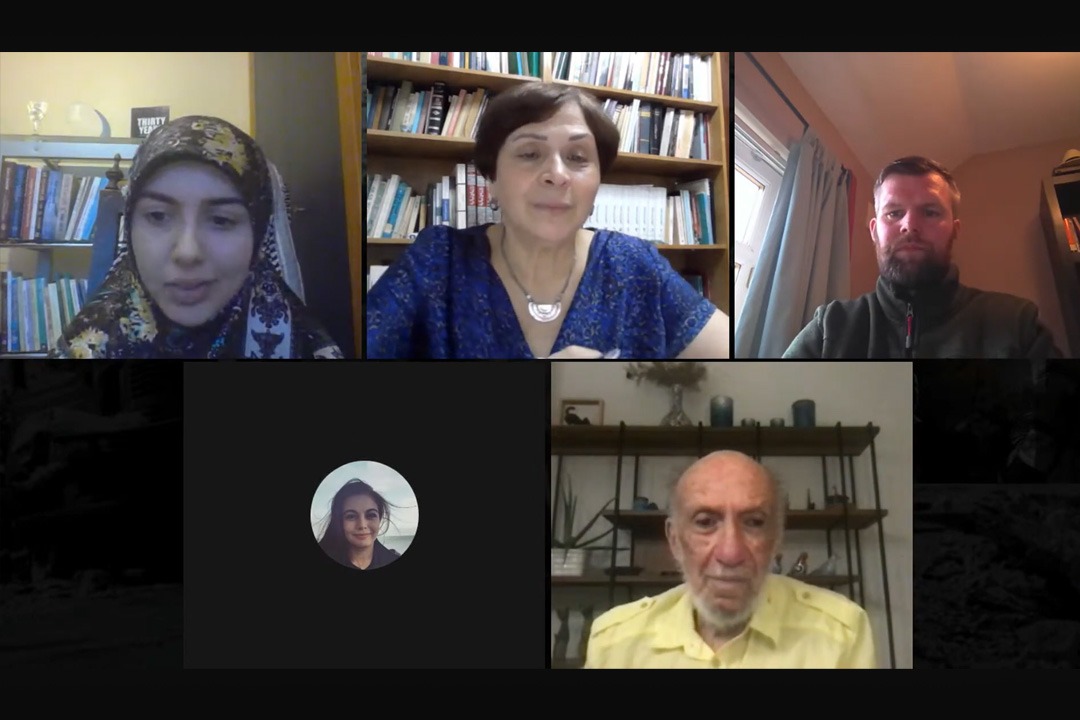
The Palestinian Return Centre (PRC) held a webinar commemorating the 73rd anniversary of the Palestinian Nakba of 1948, when thousands of Palestinians were forced out of their homes by Zionist gangs to make way for the creation of prrsent-day Israel.
The webinar was chaired by political activist in the UK Batoul Sbeita.
Richard Falk, a professor emeritus of international law at Princeton University, and a former United Nations rapporteur on human rights in Palestinian territories occupied in 1967, sounded the alarm over the crimes of ethnic cleansing committed by the Israeli occupation against the Palestinians since the Nakba days.
He said Israel aims to ethnically cleanse the Palestinians and prevent them from returning to their homeland.
Feminist Randa AlSanyoura, also an expert in international humanitarian law, said the Palestinians have been displaced from their homeland more than once since of the Nakba.
She referred to Israel’s eviction plan targeting Palestinian families in the occupied east Jerusalem neighborhood of Sheikh Jarrah as a stark reminder of the forcible dislocation of Palestinians in 1948.
She added that such crimes seek to establish more setller units for Israelis in violation of international law.
She also said that Israeli aggressions have forced Palestinian women and children in the blockaded Gaza Strip to seek shelter at UNRWA schools and premises.
The activist referred to what she described as a “thread of hope”, in reference to the International Criminal Court’s decision to investigate Israeli war crimes against the Palestinians, expressing her hope that the day will come when the occupation leaders will be held to account.
Actuvist “Sawssen Mohammad” warned of Israeli plans to foster an evironment of deprivation and homelessness against Palestinian children.
In her contribution she cited affidavits testifying to Israeli assaults on Palestinian children and violation of their rights.
She said as many as 500 Palestinian minors have been held in Israeli detention centers and scores of others have been killed in Israeli airstrikes on the blickaded Gaza Strip.
Activist Jerry Carol underscored the latest surge in violence by Israeli forces, saying the international community should urgently step in and work on bringing Israeli crimes against the Palestinians to a halt.
Every year on May 15 Palestinians commemorate the day in which tens of thousands of civilians were forced out of their homes during the war that led to the creation of the self-proclaimed State of Israel in 1948.
This year, the Nakba Day comes amid deadly Israeli airstrikes, Jewish mob attacks and other forms of violent tactics imposed by the Zionist forces.
On May 15, 1948, some 750,000 Palestinians were expelled into refugee camps that still exist in the West Bank, Gaza, Jordan, Syria and Lebanon following the creation of the State of Israel in 1948.
Millions of Palestinians, including those displaced with the establishment of Israel, now found themselves having to live under military occupation, as well as further Israeli expansionism in their lands.
For many Palestinians, the Nakba is the first chapter in a process of land grab that began in 1948.
On Saturday, an Israeli airstrike targeted and destroyed a high-rise building in Gaza City that housed offices of The Associated Press and other media outlets hours after another Israeli air raid on a densely populated refugee camp killed at least 10 Palestinians from an extended family, mostly children.
Over recent days, nearly 10,000 Palesitinians fled to UNRWA schools as they sought safe shelters.
The latest outburst of violence by Israeli forces and settlers started in Jerusalem and spread across the region over the past week, with clashes and rioting in mixed cities of the occupied Palestinian territories. There was also widespread Palestinian protests Friday in the occupied West Bank, where Israeli forces shot and killed 11 people.
PRC has been deeply concerned by the latest surge of violence by the Israeli occupation forces and settlers. The international community and the U.N. agencies should play a crucial third-party role in deterring unauthorized Israeli measures and in facilitating and fostering a climate of dialogue towards a peaceful resolution of the Palestinian-Israeli conflict, including the future status of Jerusalem.
PRC strongly condemns Israel’s imminent eviction of Palestinians in the east occupied Jerusalem city of Sheikh Jarrah, in violation of its obligations under international humanitarian law and UN resolutions. If unaddressed, the eviction plan could lead to the displacement of over 500 Palestinians, including women, children, and elderly civilians, from their homes in Sheikh Jarrah.
The international community should intervene immediately to pressurize Israel to abide by its obligations under international law secure Palestinians’ inalienable rights, including their right to stay on their native land and establish an independent Palestinian State with Jerusalem as its capital.
A lasting solution to the Palestinian refugee plight should also see the day. Palestinian refugees should be granted their right to return to their motherland as per UN Resolution 194 (III) resolving that “refugees wishing to return to their homes and live at peace with their neighbours should be permitted to do so at the earliest practicable date.
PRC Wraps Up “Return Week” Event
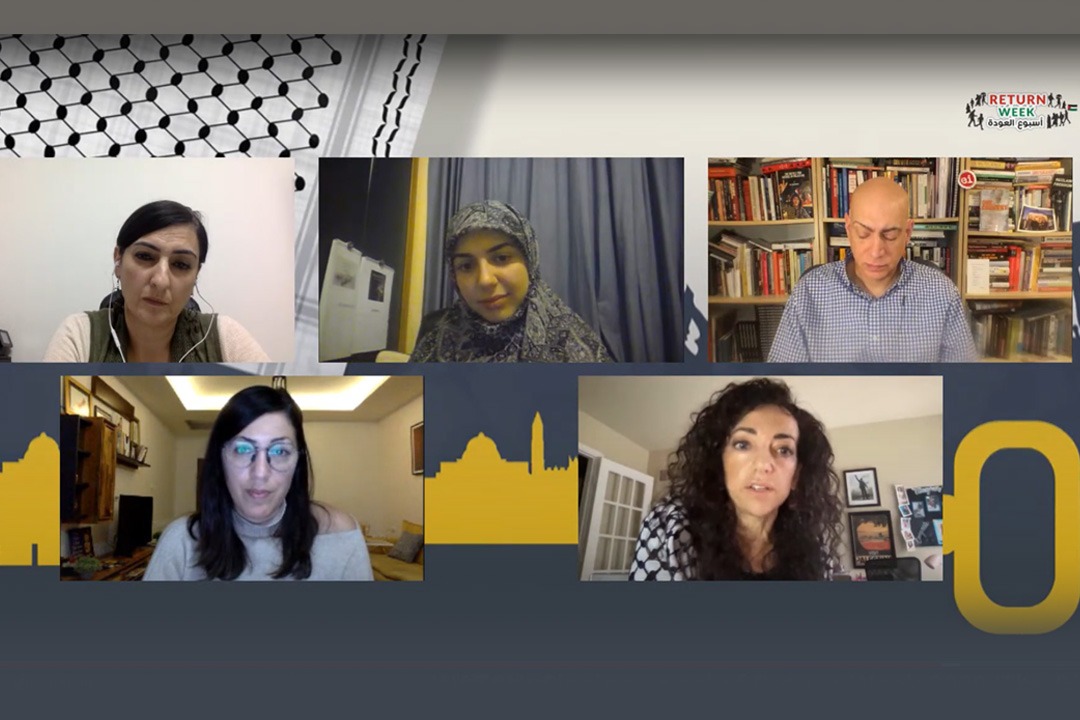
On the fifth and last day of the “Return Week”, prominent academics, activists, and legal experts provided forward-looking perspectives on the Palestinian liberation struggle and the right of return.
In a session entitled ‘The Right of Return: 72 Years of Waiting’ and chaired by activist Batool Subeiti, the first speaker—Lubnah Shomali, from Badil human rights organization—said the Palestinian Nakba extends well beyond the period from 1947 to 1949. The mass exodus began during the British Mandate of Palestine.
In a series of maps she presented during the webinar, Shomali underscored the tragedy that has befallen the Palestinians due to mass displacement, land and property confiscation, and apartheid policies.
She said there are currently about 8.7 million Palestinian refugees and displaced persons. 66% of Palestinians were displaced at least once in their lifetime.
Najwan Berekdar, from ZOCHROT, also appeared onboard. ZOCHROT is an NGO working since 2002 to promote acknowledgement and accountability for the ongoing injustices of the Nakba, the Palestinian catastrophe of 1948 and the reconceptualization of the Return as the imperative redress of the Nakba and a chance for a better life for all the country’s inhabitants.
She said that like many others, she feels that she is a refugee due to the racist Israeli policies perpetrated in Palestinian territories occupied since 1948 (present-day Israel).
Berekdar emphasized that the right of return is not just exclusive to Palestinians living abroad or the blockaded Gaza Strip or the West Bank; it’s also about those who seek to retrieve their own place on their native land and villages.
For his part, Dr. Ramzy Barood, an author, a syndicated columnist, editor of Palestine Chronicle and a Senior Research Fellow at Center for Islam and Global Affairs (CIGA), underscored the political hurdles preventing the translation of UN resolutions into action.
He said it is high time the international community corrected the traditional understanding that a refugee only needs food and relief items. He said being a refugee is much more complicated and deeper because it is about the search for identity.
Barood said the real challenge is to turn the right of return into a political struggle.
At the same time, Palestinian-American lawyer Huwaida Arraf tackled Israel’s racist policies, which had existed long before 1948 in an attempt to displace the native inhabitants and give way for the establishment of colonial settlements.
Arraf said the implementation of international law has always been subject to political decisions, adding that the Palestinians should continue to speak up for their right of return and mobilize the international community to that end.
She said return is the only fair and legitimate solution to the Palestinian refugee plight: “Our dreams and freedoms are stronger than Israel’s weapons”.
Ali Abunimah, founder of the Electronic Intifada website, said as time has passed by, Israel has been striving to implement tactics aiming to turn the world’s attention away from the Nakba and the right of return.
He said the Palestinians are still enduring the repercussions of the Nakba and are being denied their right to self-determination.
Palestinian author and film-director, Farah Nabulsi also shed the light on the early founding stages of the self-proclaimed Israeli state which has seen the day through a policy of ethnic cleansing, land grab, and forced displacement.
She said nearly 750,000 Palestinians were forced out of their homes by Zionist militias during the Nakba of 1948.
In her view, Israel would not have seen the day had the native Palestinian inhabitants not been displaced from their towns and cities.
On Monday 7th December 2020, the Palestinian Return Centre (PRC) launched its long-awaited event “Return Week”, marking 72 years since the establishment of UN Resolution 194, which outlines the legality of the Palestinian right of return.
The opening panel was marked by the presence of a plethora of prominent academics. Entitled “The Inalienable Right of Return” the panel was chaired by Shabbir Lakha, from Stop the War Coalition and Counterfire.
Held in its first version this year, the ‘Return Week’ is slated to be held annually by PRC so as to raise awareness amongst the international community about the inalienable right of Palestinian refugees to return to their homeland.
Every year, a plethora of activists, academics, and political commentators will be taking part in seminars organised by PRC as part of ‘Return Week’, in an attempt to underscore the Palestinian refugee plight and discuss pro-Palestine outreach policy and advocacy mechanisms seeking to enable Palestinian refugees to exercise their right of return, through international laws and conventions.
On 2nd Day of Return Week, Palestinian Refugees Tell Stories of Their Plight
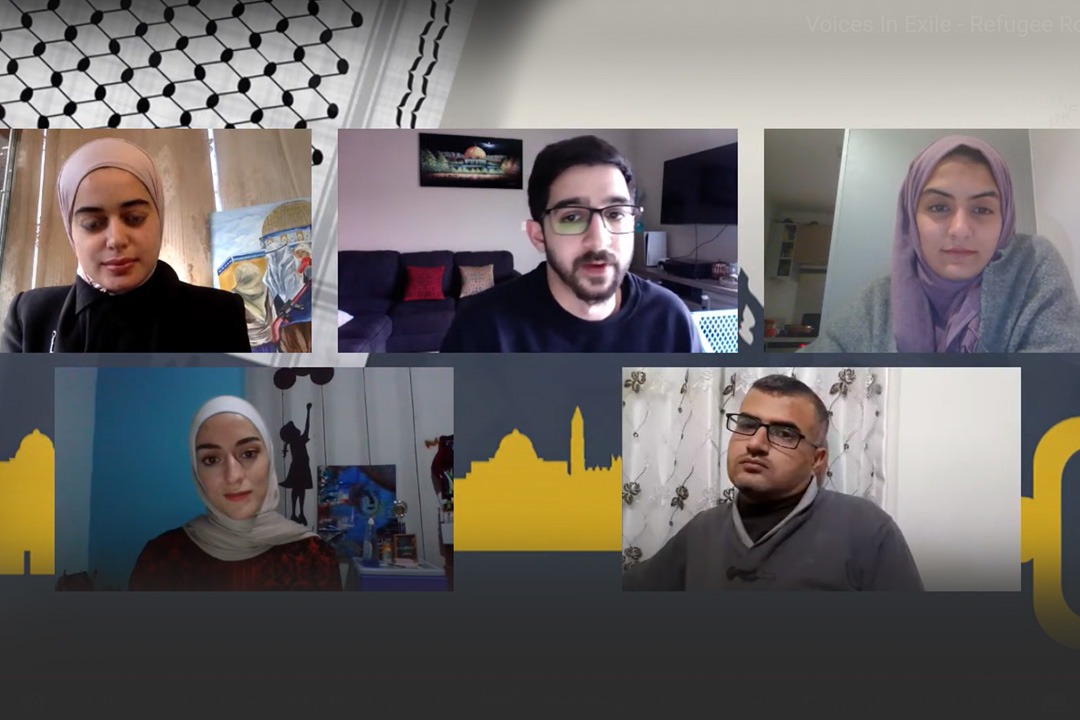
On the second webinar of the “Return Week”, held on Tuesday at 06 p.m GPT, PRC gave the floor to Palestinian activists and refugees who have faced mountainous journeys trying to overcome the trauma inflicted by years of displacement, homelessness, and search for citizenship.
The panel was chaired by Nader Hammoud, the founder of “Palestine in America” blog.
On the panel was Hanan Al Hroub, a Palestinian instructor who received her Global Teacher Prize award from Sunny Varkey of the Varkey Foundation. Hanan grew up in the Palestinian refugee camp, Bethlehem, where she was regularly exposed to acts of violence. She went into primary education after her children were left deeply traumatised by a shooting incident they witnessed on their way home from school. Her experiences in meetings and consultations to discuss her children’s behaviour, development and academic performance in the years that followed led Hanan to try to help others who, having grown up in similar circumstances, require special handling at school.
Hanan said the Palestinians are the only people who have managed to turn their suffering into a space of hope and creativity.
She gave instances on how the Israeli occupation authorities frequently shut down Palestinian schools. “The occupation can destroy our homes, uproot our trees; but never ever shall it take away our dreams”.
She said there could be no peace in the world as long as the Palestinians are deprived of the right to live in peace and serenity on the land of their forebears.
The next speaker was Amina AlAshkar, a Palestinian refugee and journalist living in Lebanon.
Amina spoke about the tragedy of Palestinians living in refugee camps in Lebanon, where they have been denied their basic human rights, including access to the labor market.
Harking back to her father’s story, she said her father was forced to work under dire humanitarian conditions for over 15 hours every single day to provide for his family and secure Amina’s education fees until she managed to learn English and pursue her MA studies in the U.K.
She said Palestinian refugees continue to face discriminatory pressure. In refugee camps they continue to suffer a sense of dis-belonging and loss.
In her terms, the only solution to the refugee plight is to secure the refugees’ right to return to their homeland and end Israel’s occupation of Palestine.
The third speaker—Osama Shahin, a Palestinian refugee from Syria and an engineer working in the U.K—said his story has been one of endless suffering.
He said it is painful that Palestinian refugees are considered as “second-class citizens”. His family was subjected to a two-fold displacement, one in 1948, when the Zionist gangs forced his grandparents out of their lands; the second in 2011, following the outburst of the bloody Syrian conflict.
Osama returned to the moments when he was denied entry into two Arab Gulf countries due to his refugee status.
Also figuring onboard was Assala Sayara, a social worker, social justice activist and storyteller of Palestinian descent, currently living in Sydney, Australia.
Asala said the Israeli occupation has failed to take away Palestinian refugees’ right of return despite its ceaseless attempts to negate this right and displace the Palestinians from their homeland.
She said Palestine lives in her heart and soul, though she has been living thousands of miles away from the land of her grandparents.
“Palestine was and still is my reason for living”, said Asala, who visited Palestine more than once and witnessed, with her own eyes, Israel’s crackdowns and discriminatory practices at security checkpoints.
For her part, Lorena Mussa, the President of the General Union of Palestinian Students of Chile, said as a member of the Palestinian community, which makes up a minority group in Chile, she cannot forget about her right to return to her native land from which her parents were forced out following the Nakba of 1948.
Lorena accused the Israeli government of pursuing preplanned human rights abuses against the Palestinians, saying she attempted to visit Palestine more than once but Israel keeps denying her this right.
She said the Palestinians will not bear remaining in exile for their whole lifetime, adding that the key solution to the issue is to have the refugees’ right of return materialize on the ground.
Ahmed Abu Artema, a Palestinian writer and activist and the founder of ‘The Great March of Return’ in Gaza, also spoke about the suffering of Palestinian refugees in Gaza due to the 12-year Israeli blockade.
He said the Great Return March held on the Gaza border, and which coincided with Donald Trump’s tension-rousing declaration that Jerusalem is Israel’s capital, was a proof that the Palestinians will never forfeit their right of return.
At the same time, Anas Radhi, from the Palestinian Youth Foundation in Britain – Olive, stressed the need to raise the younger generations’ awareness about their ties to Palestine.
He said Palestine is a fair cause, urging the youth and the international community to advocate a just and lasting solution to the Palestinian refugee plight.
The final speaker—Lina Abu Jaradeh, a Palestinian refugee in Jordan who won several international awards in film making and writing—said the Palestinians should not wait for anybody to recognize them; The Palestinians should create their own opportunities, speak their own language, and stand up for their own rights.
She said the right of return is paramount and it is so painful that first-generation refugees are dying outside their native land.
On Monday 7th December 2020, the Palestinian Return Centre (PRC) launched its long-awaited event “Return Week”, marking 72 years since the establishment of UN Resolution 194, which outlines the legality of the Palestinian right of return.
The opening panel was marked by the presence of a plethora of prominent academics. Entitled “The Inalienable Right of Return” the panel was chaired by Shabbir Lakha, from Stop the War Coalition and Counterfire.
Held in its first version this year, the ‘Return Week’ is slated to be held annually by PRC so as to raise awareness amongst the international community about the inalienable right of Palestinian refugees to return to their homeland.
Every year, a plethora of activists, academics, and political commentators will be taking part in seminars organised by PRC as part of ‘Return Week’, in an attempt to underscore the Palestinian refugee plight and discuss pro-Palestine outreach policy and advocacy mechanisms seeking to enable Palestinian refugees to exercise their right of return, through international laws and conventions.
PRC’s Long-Awaited ‘Return Week’ Launches on December 7th
The Palestinian Return Centre will be hosting its first annual ‘Return Week’ with efforts fully underway to amplify the Palestinian refugee community’s call for their right of return.
The PRC will officially be launching ‘Return Week’ on Monday, December 7, 2020 at 7pm (GMT) – 8:30pm (GMT). A distinguished panel of speakers will inaugurate Return Week, the opening seminar will underscore the inalienable Palestinian right of return.
The opening seminar will be chaired by Shabbir Lakha, Officer at Stop the War Coalition and campaigner at the People’s Assembly; Speakers include Noura Erakat, a human rights attorney, author and assistant professor at Rutgers University. She has served as legal counsel to the U.S. House of Representatives and as a legal advocate for Palestinian refugee rights at the United Nations; Iman Jodeh, Representative-Elect for House District 41 in Aurora, Colorado. She is a first generation American, born to Palestinian immigrants and refugees, and the first Muslim and Arab woman elected to the Colorado State Legislature; Ghada Karmi, a Palestinian doctor, academic and author. She writes frequently on Palestinian issues in The Guardian, The Nation and Journal of Palestine Studies. Her many publications include her acclaimed memoir, In Search of Fatima, chronicling her family’s expulsion from Palestine to Britain in 1948.
The second event of Return Week, entitled ‘Voices in Exile’ seminar, aims to provide a platform for Palestinian refugees around the world voicing their plight, and calling for their right of return, from Lebanon to Chile, to Australia to Gaza. Speakers include Ahmed Abu Artema, a Palestinian writer and activist and the founder of ‘The Great March of Return’ in Gaza; Hanan Hroub, the winner of the Global Teacher Prize in 2016; Assala Sayara, a social worker, social justice activist, public speaker and storyteller of Palestinian descent; And Lorena Mussa, the President of the General Union of Palestinian Students of Chile.
‘Return Week’ will culminate in a closing panel entitled ‘The Right of Return: 72 Years of Waiting’. The closing panel consists of speakers who will be shedding light, exclusively, on the joint efforts of the US and Israel to nullify the Palestinian right of return, as well as well their efforts to mobilise for the right of return of the world’s largest refugee population.
‘Return Week’ commencing this year, will be held annually by the PRC to raise awareness amongst the international community about the inalienable right of Palestinian refugees to return to their homeland.
Every year, a plethora of activists, academics, and political commentators will take part in seminars organised by the PRC as part of ‘Return Week’, in an attempt to underscore the Palestinian refugee plight and discuss pro-Palestine outreach policy and advocacy mechanisms seeking to enable Palestinian refugees to exercise their right of return, through international laws and conventions.
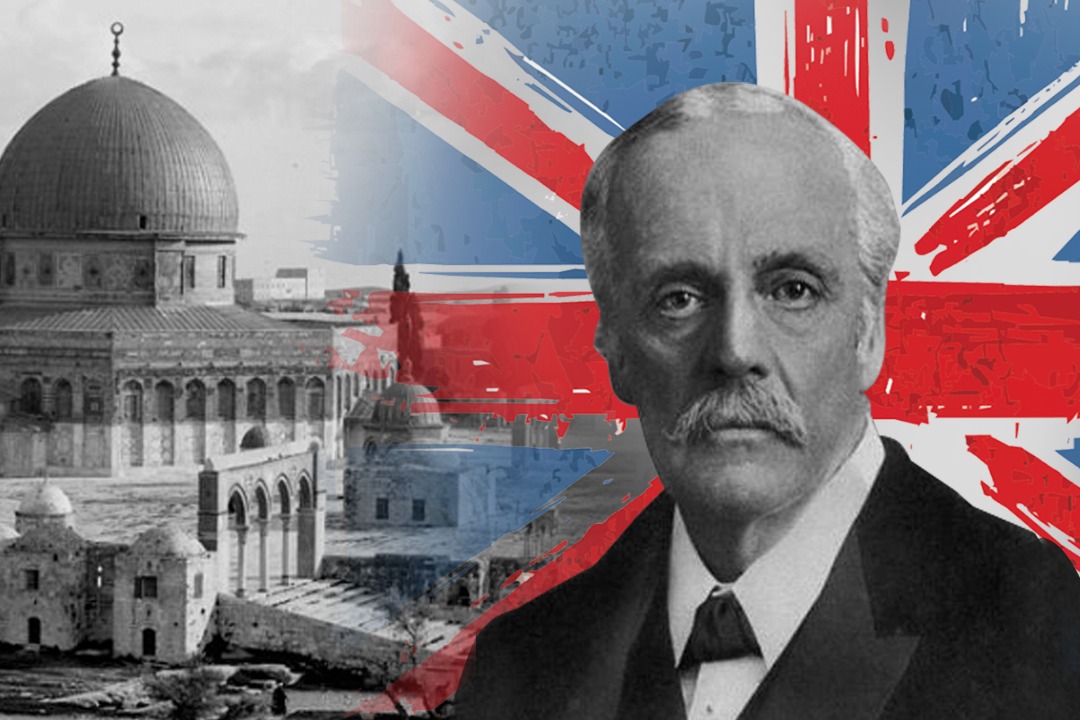
On Its 103rd Anniversary… Balfour Pledge Serves as Reminder of Achievements of PRC’s “Apology Campaign”
The efforts made by the London-based Palestinian Return Centre (PRC) have been making headway over recent years to urge Britain to apologize to the Palestinians for the tragedy that has befallen them as a result of the Balfour Declaration.
The Balfour Declaration, which was issued on November 2, 1917, resulted in nearly 7 million Palestine refugees being scattered all over the world, torn from the nourishment of home and the warmth of family.
The declaration turned the Zionist aim of establishing a Jewish state in Palestine into a reality when Britain publicly pledged to establish “a national home for the Jewish people” there.
The pledge came in the form of a letter from Britain’s then-foreign secretary, Arthur Balfour, addressed to Lionel Walter Rothschild, a figurehead of the British Jewish community.
Though the Balfour Declaration included the admonition that “nothing shall be done which may prejudice the civil and religious rights of existing non-Jewish communities in Palestine”, the British mandate was set up in a way to equip Jews with the tools to establish self-rule, at the expense of the Palestinian Arabs.
Balfour Apology Campaign
The Balfour Apology Campaign (BAC), which was launched by PRC in 2017, dovetails ongoing endeavors to hold Britain historically, morally, and politically accountable for the dispossession and displacement of 750,000 civilians from their own and only homeland—Palestine—to give way for the establishment of the self-proclaimed state of Israel.
Reaching out to a plethora of British and EU diplomats and MPs, PRC has been striving to mobilize worldwide support for the campaign and communicate its demands to official bodies, mainly the British government.
In 2017, an e-petition headed up by PRC and launched on the official website of the British Parliament, attracted fewer than 14,000 signatures by British nationals. Duty-bound to respond to the petition, after it managed to pass the benchmark for an official response, the never-sorry government responded 10 days later, only to confirm that it will not extend any apology over the Balfour pledge.
Yet, the Government’s statement accepted that the Declaration “should have called for the protection of political rights of the non-Jewish communities in Palestine, particularly their right to self-determination” but said that lasting peace must now be established through a two-state solution.
The acknowledgement that the Balfour Declaration resulted in a violation of Palestinian rights represents an unprecedented confession in the history of the UK government, with many academics and political analysts viewing the confession as a sign of imperialistic narcissism that hides an undoubtful feeling of guilt.
At the same time, Britain’s letter has been read as a sign of its failure to confess to to the horrendous crimes committed by Zionist gangs who crept into Palestine during the British Mandate and embarked on systematic massacres and ethnic genocides that brought about the displacement of millions of Palestinians from over 570,000 Palestinian villages in 1948.
As BAC campaigners sought to pass the 100,000 yardstick for a parliament discussion, the parliamentary follow-up committee abruptly altered the cut-off date, reducing it from six months to two months and a half only under the guise that snap elections had been called.
First World War Conference
In 2013, a conference was staged by BAC under the title “The Legacy of Britain in Palestine”. The event spotlighted Britain’s imperialistic history and its ideology-motivated policies in Palestine.
The conference tackled the impacts of the First World War and the repercussions of the ensuing political agreements on Palestinian land and rights.
The conference culminated in a book comprising a bundle of research papers by academics, diplomats, and researchers who took part in the event.
“Balfour Road” Movie
PRC re-introduced the campaign during a seminar hosted by Baroness Jenny Tonge in response to Britain’s attempt to celebrate the centenary of the Balfour Declaration. The seminar was chaired by Lord Norman Warner.
A short movie bearing the title “The Road to Balfour” and released on October 30, 2017, draw the world’s attention to the calamitous repercussions of the Balfour Declaration.
Available in 17 different languages (English, Arabic, Spanish, Danish, Dutch, Swedish, Polish, Italian, Turkish, Hindi, Urdu, Farsi, Chinese, Russian and Indonesian) and broadcast in 25 cities around the globe, the film puts on display the story of a British family who are driven out of their home by the British government and forced to live in a cramped shack in the backyard. Another family—the Smiths—take possession of the house and put down roots in the building, leaving the real house owners—the Johnees—with neither food nor medicines. Heavily-armed soldiers escort the Smiths at the same time as they tighten the noose around the neck of the Johnees and deprive them of their basic rights. The film was premiered inside Queen Elizabeth Hall in London.
E-Memorandums
An online platform was also launched by BAC campaigners to pass on e-memorandums and give the floor to pro-Palestine activists from around the world to speak up their minds, indirectly address the British government, and urge the Royal Albert Hall to backtrack on its decision to host a centennial celebration of Balfour Declaration.
The move garnered widespread back-up as in no more than three days over 11,000 memos were dropped into the email of Royal Albert Hall.
Ongoing Efforts
Dozens of seminars/webinars and meetings have been convened by PRC in London and other European cities, in tune with its ceaseless endeavors to speak up for Palestinians’ inalienable rights.
Through its fruitful involvement in the UNHRC’s sessions, PRC continues to draw the attention of a consortium of NGOs, EU diplomats, prominent activists, and influential high-ranking stakeholders to the intrinsically-monolithic character of the Balfour Declaration and its tragic consequences on the Palestinian people.
PRC
The Palestinian Return Centre (PRC) is an independent, non-partisan, organization committed to advocating for the rights of Palestinian refugees, in accordance with the historical, political and legal basis of the right to return.
PRC educates the public, defends human rights, and empowers Palestinian refugees, in order to put the plight of the refugees back on the political agenda.
Although the PRC is Palestinian in origin, it is not affiliated with any particular organization or party. It works on the assumption that the plight of the Palestinians is not just a national liberation movement but is, in essence, about the core values and ideals that are at the centre of any human civilization and international law.
In July 2015, PRC was granted consultative status at the United Nations as a Non-governmental organization (NGO) in special consultative status with the Economic and Social Council (ECOSOC), in recognition of its efforts in standing up for Palestinian human rights.
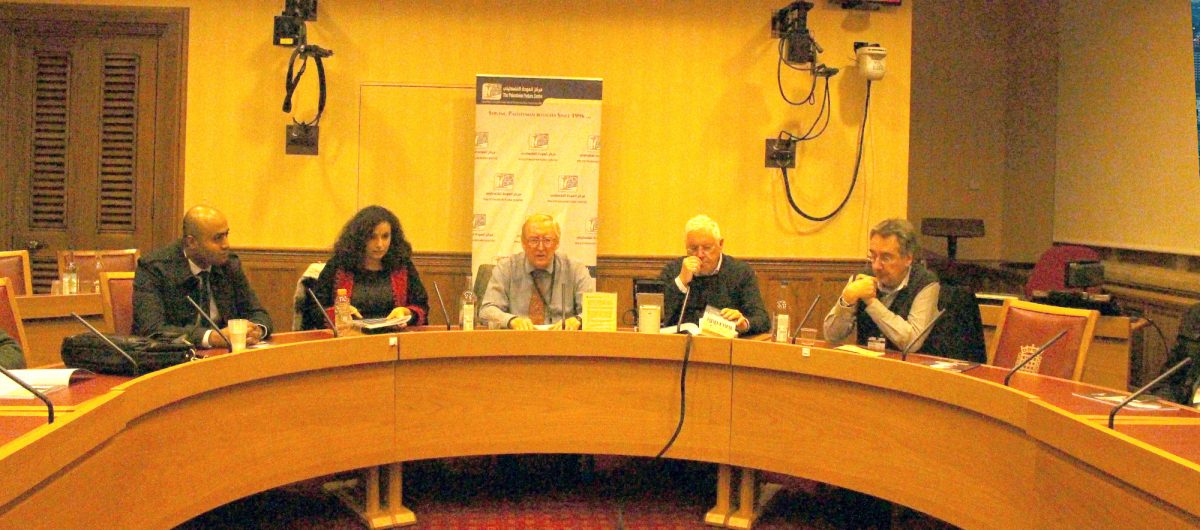
Lord Warner hosts PRC for Parliamentary event on ‘Palestine and the Balfour Declaration’
(London) – The Palestine Return Centre (PRC) organized a parliamentary meeting in the Houses of Parliament on the 20th of November titled “Palestine and the Balfour Declaration”, hosted and chaired by Lord Norman Warner, a cross-bench peer, and a Labour health minister between 2003 and 2007.
The speakers at the event included Salma Karmi-Ayyoub, barrister and legal consultant for the Palestinian human rights organisation Al Haq; Bernard Regan, author of The Balfour Declaration: Empire, the Mandate and Resistance in Palestine, and John Rees, historian, broadcaster and campaigner. He is a Visiting Research Fellow at Goldsmith’s, University of London and a National Officer of the Stop the War Coalition.
Each speaker approached the topic of Palestine and the Balfour Declaration from a specialist angle. Bernard Regan provided the context of the creation of the Declaration, focusing on the discussions that took place in the cabinet around the time of its foundation. Regan drew attention to Britain’s main objective in the Declaration; that is the pursuit of Britain’s imperial interests rather than a concern for the welfare and safety of the Jewish population. Regan described the Declaration as a “marriage of convenience between the British and Zionism,” while emphasizing that the decision to create the Declaration was not unanimous.
John Rees further highlighted the presence of alternative voices, pointing out that supporters of Israel would like to portray the creation of its state as “inevitable or uncontested. But the Balfour Declaration allows us to see that the establishment of Israel was neither of those two things.” Indeed, John Rees drew attention to the fact that the Declaration was contested at the highest level in the cabinet by Edwin Samuel Montagu, the third practicing Jew to ever serve in the British cabinet. Montagu’s prophetic remarks that the Zionist project would lead to a displacement of Palestinians, and that there would be a backlash against the Jewish population, were not listened to – not least due to the anti-Semitic attitudes in the cabinet. John also highlighted that British policy wasn’t only backing the Zionist project. T.E. Lawrence was apparently promising the same land to the Arab population in order to advance their project in the Ottoman Empire, illustrating Britain’s method of using any indigenous population to advance their imperial policies – which to this day causes instability and shifting alliances in the Middle East.
Salma Karmi-Ayyoub used her platform as an opportunity to reflect on what she found to be the root causes of the Arab-Israeli conflict, and stressed that there is a need for a paradigm shift in our way of thinking about Israel;
“We should move away from the notion that Israel is a state that is guilty of numerous human rights abuses, towards the notion that Israel has an unlawful regime.”
Karmi-Ayyoub highlighted that the root of the conflict comes down to contradictions between the right of Palestinian people for self determination and the ‘Jewish Project’; the privileging of Jews over other populations in order to create a Jewish majority state. The ‘problem’ arises with the indigenous population, which resulted in ethnic cleansing and a wholesale of Palestinian property. The consequence is thus the maintenance of a regime of racial discrimination of Palestinians inside both historical Palestine and the occupied territories.
Salma Karmi-Ayyoub made a key reference to a 2004 International Court of Justice report[i], which issued an advisory opinion that Israel’s building of a barrier in the occupied Palestinian territory is illegal, that construction must stop immediately and Israel should make reparations for any damage caused. Although these are important recommendations, and Israel is de facto seen as having an unlawful regime, Karmi-Ayyoub suggested that the legal community must go a step further and explicitly state that the occupation itself is illegal, and as an extension of Israeli government practices, would make Israel an illegal regime.
When a regime is deemed ‘unlawful’, international law dictates that states are obliged to not recognize the regime, and work to end it. However, practical UK foreign policy actively supports the arms trade, supports settlement produce, and, crucially, provides diplomatic cover for Israel. UK foreign policy is thus “unlawful under standards of international law”, Karmi-Ayyoub stressed, and urged supporters of Palestine to change their view of Israel in order to move the UK government to take their words into action.
To summarise, Lord Norman Warner facilitated a stimulating discussion amongst the audience and offered the speakers a chance to share their closing remarks. Salma Karmi-Ayyoub again stressed the importance of a paradigm shift, and suggested that perhaps a new generation with a new vision will be able to find unforeseen solutions. For the moment, she encouraged supporters of Palestine to adopt BDS, respecting the wishes of the Palestinian people. John Rees finished off with a similar sentiment, quoting the adage that “wars and revolutions are unforeseeable before they happen, and inevitable after they happen”. Bernard Regan emphasized the importance of international solidarity, also inviting supporters of Palestine to join the Palestine Solidarity Campaign, the BDS campaign, and pay attention to the needs of people in Palestine.
Lord Norman Warner lastly drew attention to the fact that the British government has still not recognized the state of Palestine, and criticized the difficulty with which Parliamentarians can visit Gaza.
[i] http://www.un.org/apps/news/story.asp?NewsID=11292#.WhQGV9SLTGg

100 Balfour Road
This film, produced by the Palestinian Return Centre (London) and the Balfour Apology Campaign, puts on view the tragic fallouts of the Balfour Declaration (1917), in which the British Foreign Secretary Arthur Balfour signalled the go-ahead for the establishment of a Jewish State in Palestine.
Available in 18 different languages: English, Arabic, Spanish, French, German, Danish, Dutch, Swedish, Polish, Italian, Turkish, Hindi, Urdu, Farsi, Chinese, Russian, Indonesian and Malay.
Produced by: ima6ine
Written By
Richard Beer
CAST
Tim Bartholomew as Arthur Balfour
Tom Coulston as Father – Joneses
Hayley Sheridan as Mother – Joneses
Chloe Zelkin as Alice
Henry Lile as Adam
Anna Ray as Mother – Smiths
Andrew Shire as Father – Smiths
Lily Hannigan as Daughter – Smiths
Ivo Dickason as Son – Smiths
Directed By
Anas al-Karmi
Assistant Director
Abdul Mu’ti AlTirawi
Audiographer
Ammar AlZeer
Prepared By
Ali Faraj
Produced By: The Palestinian Return Centre © 2017
100 Balfour Road is out now
WATCH NOW
100 Balfour Road
One Letter, A Hundred Years of Injustice and Opression!
A Short Film by
The Palestinian Return Centre and Balfour Apology Campaign
Why 100 Balfour Road?
Can we still be held hostage by the actions of our past? Is it possible for a decision to mean well for a group and brutally impoverish another? The answers you seek lies in “100 Balfour Road” as the movie brings to you the visual effects of the Balfour Declaration of 1917.
The declaration was a power statement made by Lord Arthur Balfour in 1917 to the leaders of the British Zionist community granting them the power to establish a national home for the Jewish community in Palestine.
This statement was made without any consideration of the people of Palestine, the Palestinian leadership was not represented in the meetings that led to the declaration and the people of Palestine were referred as “ non- Jewish” even when their comfort and sovereignty as a nation were at stake.
This declaration changed the history of Palestine, putting to sword the relative peace in that region and giving birth to years of conflict, war, oppression, displacement and even death of thousands of Palestinian lives.
This year makes it one century since the obvious dangerous decree was made and the effects are still living with us today, the displacements and operation that followed the declaration are still imminent. There are over 7 million Palestinian refugees living in abject poverty all over Palestinian territories, Jordan, Lebanon, and even Syria.
Major cities of Palestine origin as a still held hostage or colonized by settlers legalized by the declaration, an example is the city of Gaza and the west bank which is still under military occupation for over 50 years.
We all owe Palestine a heartfelt apology, especially the British government for the calamity the Balfour declaration brought to their country. The British government should take responsibility for their actions acknowledge their role in fueling one of the most brutal ethnic cleansing that followed the Balfour Declaration. Although severe damage has been done as a result of the declaration, rendering a heartfelt apology will help heal the wound faster.
Read the release press statement: https://prc.org.uk/en/post/3775/