Balfour Apology Campaign Launched at House of Lords
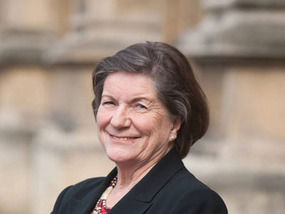
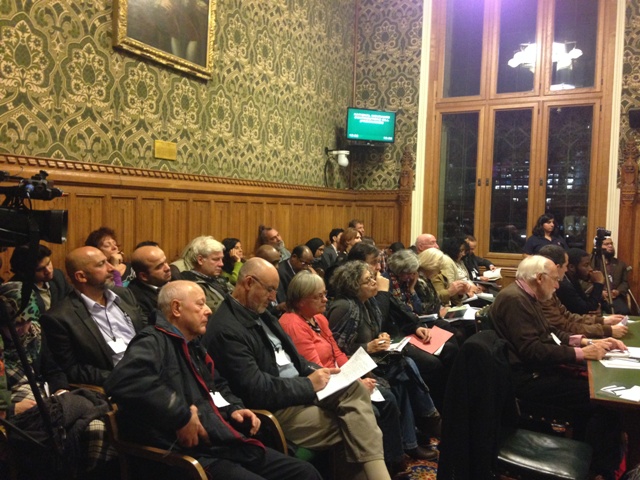
On the 25th of October, the Palestinian Return Centre hosted the launch of the Balfour Apology Campaign inside a packed out room in the House of Lords. The event was hosted and chaired by Baroness Jenny Tonge.
Balfour Apology Campaign is a UK based campaign launched by the Palestinian Return Centre (PRC) in 2013 to urge the British establishment to apologise for the 1917 Balfour Declaration. Britain’s legacy in Palestine marked an historical breach against the aspirations of the people of Palestine and shattered its hopes for freedom and self determination.
Baroness Jenny Tonge introduced introduce the evening stating “Tonight is the beginning of the apology” as she provided some background on the origins of the campaign and its significance for Palestinians.
First speaker of the evening was Majed Al-Zeer, President of the Palestinian Return Centre. Mr Al-Zeer. In regards to the launch of the Balfour Apology Campaign, he stated that “We want official recognition of Palestinian suffering”. Mr Al-Zeer continued “We are committed to fight for the self-determination of Palestinians”.
The next speaker, Karl Sabbagh, British Palestinian Historian and Writer, discussed the three conditions that need to apply in order to seek an apology – harm caused, responsibility of the apologiser, and whether the original event was avoidable.
Last speaker of the evening was Betty Hunter, Honorary President of the Palestine Solidarity Campaign discussed the importance to unite works towards changing British policy on Palestine. For Hunter it is fundamental to do so because “The Palestinian catastrophe is still ongoing” and the “International community must stand with Palestinian refugees”.
Launch of the Balfour Apology Campaign: Join us in the House of Lords on October 25th
The Palestinian Return Centre (PRC) invites you to the
House of Lords
to discuss the Launch of the Balfour Apology Campaign: Time to Say Sorry
The Palestinian Return Centre is hosting an event inside the UK Parliament a week ahead of the 99th anniversary of the Balfour Declaration which will be on November 2nd. The Balfour Declaration, which had no basis of legal authority, promised the establishment of a Jewish state in Palestine, where the indigenous Palestinians amounted to 90% of the total population.
After the Balfour Declaration Palestine became the victim of colonialism and Britain’s legacy is still evident today as Palestinians continue to be denied the right to self-determination and suffer from living under military occupation or as refugees. As the 100th year since the Balfour declaration approaches, the Palestinian Return Centre has decided to re-launch its campaign which started in 2013 called Balfour Apology Campaign which asks the UK Government to officially apologies for its past colonial crimes in Palestine.
Committee Room 2a, Houses of Parliament
Tuesday 25th of October at 7pm Hosted and chaired by Baroness Jenny Tonge
Panel Includes
Professor Manuel Hassassian, Ambassador of the Palestinian Mission to the UK
Betty Hunter, Honorary President of Palestine Solidarity Campaign
Britain’s legal and moral obligation
Karl Sabbagh, Historian and Writer
How successive British governments fell in love with Zionism, until it was too late
Majed Al-Zeer, President of the Palestinian Return Centre
On the Balfour Apology Campaign
More speakers to be announced Register by email: info@prc.org.uk
Summary of World War One Impact on Palestine Int. Conference
Summary of World War One Impact on Palestine Int. Conference
Organised by Al Jazeera Centre for Studies and the Palestinian Return Centre
8-9November 2014
The International conference “World War I: Impact on Palestine” conference, organised by AlJazeera Centre for Studies (AJCS) and the Palestinian Return Centre (PRC) and attended by prominent public and media figures, ended on 9 November 2014 in London.
The two-day event held in London drew the attention of 150 audience members to events 100 years ago as 2014 marks the 100 year anniversary of the first world war. Expert opinion was drawn upon to examine pre-war Palestine and the succession of events around the Zionist movement and British mandate of Palestine that eventually lead to the division of Palestine and 1948 Al-Nakba and how the accumulation of those activities are manifested in today’s global political context.
The two-day Conference was included a number of sessions. he first day focusing on pre-war Palestine and post-war up to the 1948 catastrophe, while the second day explored the future of Palestine including the role of the international community and social media/ technology.
On day one, the conference was convened by representatives of active in the diplomatic fields and civil society dedicated to resolving the issue of Palestine to include, Dr. Majed Al Zeer, Director of the Palestinian Return Centre; the head of research for the Al Jazeera Centre For Studies as Dr. Salah Eddin Elzein was unable to attend; Dr.Yasin Aktay, a Professor of Applied Sociology; and Dr. Manuel Hassassian, Palestinian Ambassador to the UK. All speakers spoke of the importance of the events surrounding World War One that cemented the betrayal that Palestine endured at the hands of the British and the need for that responsibility to be harboured by Britain today in ending the aggression propagated by Israel as well as bring to fruition the right of return.
Session one on day one collated the accounts from a panel of three about Palestine before World War One. Dr. Aktay, begun with an account of Turkey’s alignment with this issue and the history of the Ottoman Empire in this region. Key points to note were the affable relation between the Ottomans and Palestinian Arabs, with claims that the indigenous Arabs saw themselves as Ottoman citizens, that the Ottomans refused to sell their subjects to the Zionists and how Ottoman law has been used to this day by Israel to further its expansion of settlements. Dr. Jafar Hadi Hassan, Academic in Semitic Languages and Jewish Studies then proceeded to talk about the early Zionist movement prior to World War One and there relation to the international/warring parties and he made apparent the fractured nature of the movement, which was not unified at all up until the issue of the Balfour Declaration.
Dr. Mahmoud O. Al Haddad, Professor of Modern Arab & Islamic History at the University of Balamand, then spoke of the Machiavellian nature of the decision making power of the the powerful parties of the War. This was true of both those parties that were pro and anti Jewish. Those that were anti-Jewish, such as Russia and Germany, wanted to expel the Jews from Europe while those that were pro-Jewish supported the Zionist movement for religious reasons, yes (a return of the Jews to a promised land), but also strategic reasons as placing them in the Near East where they could act as their foot soldiers would have been of incredible strategic importance. Therefore, both sides saw benefit in utilising Palestine to these ends. The question and answer session reiterated the importance of knowing the history of Palestine, amongst other things, before actvitism can be effectively pursued. The Jewish community today is strong as well and influences to a high degree one of the most powerful nations, the USA, and its internal administration. However, it was noted that a shift is being seen again amongst the Jewish community and this will have a profound impact on Israel.
The second session, looked at Palestine during the First World War. The first speaker, Mr. John Keay, Author of the ‘Sowing the Wind: the Seeds of Conflict in the Middle East’, talked about the strategic importance of Palestine for the warring parties, in terms of it’s geographic positioning in the region, which later led to the desire to place European Jews in that land, again for strategic reasons. Mr. Karl Sabbagh, British-Palestinian academic and author, relayed the four key documents that promised Palestinians independence of their land, namely the Balfour declaration of 1917, the Sykes-Picot agreement, the McMahon-Hussein correspondence and an Anglo-French declaration. Only the Balfour declaration had treaty status but what is pertinent is that none were explicit in excluding Palestinians from their land and the division of the land of Palestine. A particularly poignant hypothetical declaration was drafted by the speaker and presented as to a potential 2017 declaration that returns land back to Palestinians. Dr. Anthony Gavin of Edinburgh University closed the session by recounting the notable events of the pre-war and war period and deducted the granting of the Jewish homeland was primarily a result of self-service of British interests, although ideological support for a Jewish homeland was there.
The third session of day one looked at Palestine after World War One and Dr. Ghada Karmi, an academic and author, opened by looking at events from the San Remo conference to the Brtish Mandate, linking the discreet meetings that were happening in the British Foreign Office, that culminated in the San Remo Conference to the Balfour Declaration, which she claims had the Zionist claim instilled in it. She also did not see how a rural people of Palestine could have any chance of being a comparable adversary to the impositions of the British and Churchill’s support of the Zionist ambition. He and Jewish immigrants saw the Arabs that lived there as vagabonds and was firmly committed to the fruition of a Jewish State. Ms Lamis Andoni, the Editor-In-Chief of Al-Araby Al Jadeed in English then spoke of the role of the Mandate in empowering the Zionist project and the Mandate a s a historical point has remained in the hearts of minds of the Palestinians. She also drew comparisons to what happened in history to the present day and noted that while the British was a key party in creating the state of Israel, the USA are funadamentally sustaining Israel’s occupation of Palestinian land. Dr. Peter A Shambrook, an Independent Historian and Author then described how the Mandate was an ‘iron cage’ for the Palestinians. He noted that there was a coupling of increasing reports of Jewish persecution across Europe as well Churchill’s mindset that the Arabs had done nothing with the land of Palestine except confine it to desert. However, while the British wanted to rid its hands of Palestine by signing it over to the League of Nations, in the USA, President Truman became an ally in furthering their goal.
The colonization question seemed to be an important one to some members of the panel and audience, during Ottoman rule, which unconcluded and perhaps subjective. I.e. Were the Ottoman Empire colonizers.
Day two of the conference started with an initial session on international law after World War One and World War Two. Dr. Malath Al Agha, a PhD in EU-Russia foreign policy towards the Middle East and the Palestinian question, from Exeter University, opened and talked about internatioanlisation of the Palestinian question. While the Royal Peel Commission and the British Government made the decision to divide Palestine but the policy over the next 10 years were in favour of Israel. Rather than a political issue, the Palestinian cause was transferred into a humanitarian one but the internationalization of the peace process has not worked in favour of Palestine and has allowed impunity to Israel to continue it’s expansion through settlements over Palestine and further deny Palestinains of their rights and land. Jeff Handmaker, LLM, PhD and senior lecturer in law, human rights and development, International Institute of Social Studies (ISS) of Erasmus University (EUR) spoke about a number of the legal issues that arise after the great world wars that highlight the exploitation of Palestinian land and the transparent ignorance of a number if facets of international law. He alludes that the fact of conflict is not the most significant issue of the Israel Palestine conflict but the impasse that is apparent through various phases after the war and this was lead into by the refusal of the right of return. Acknowledgment of the right of return and the pursuit if self-determination is therefore fundamental to a just settlement. Professor Gilbert Achcar, Professor of Development Studies and International Relations, SOAS, closed by explaining how Both world wars allowed Israel to gain immunity to its crimes in international law. It was not the Balfour Declaration in isolation that provided the framework for a Jewish state initially, for example, the per suction and discrimination of Jews in Europe was instrumental in increasing numbers of migrants to Israel and in gaining the sympathy of the greater powers to Zionism. To date, anti-demotion is used as a defence for any criticism of Israel’s actions.
Mr. Oliver Miles, Former British Ambassador to Libya and Middle East Expert, initiated the second session of the day, which focused on the future of Palestine. Oliver stressed that a two state solution for the historical lands of Palestine, one Jewish state, and another for Palestine is firmly engrained in diplomatic intentions. Mark McDonald, Barrister at Chambers of Michael Mansfield Q.C, and Labour Friends of Palestine co-founder spoke about the party politics of pro-Israel and pro-Palestinian camps. The Labour Friend of Israel group, for example, is over –attended in comparison however, the hope is that Ed Miliband can carry forward a sympathetic agenda to the Palestinian cause as well as growing pro-Palestinian sentiment throughout Parliament. Although, he said that the US now needs to be excluded from discussions due to their overriding support in Aid and military finance, there is an apparently inviable relationship there, therefore, focus needs to be concentrated on regional players and BDS. The third speaker, Dr. Salman Abu Sitta, Historian and Academic, Author of Palestine Atlas, talked on charting the future of Palestine. He stated that two assumptions have been used to create the Israel state, which was the existence of anti-Semitism in Europe and by Palestinians and the desire to expel Jews. Today that excuse is still being propelled but mobilisation is occurring, particularly with the emergence of electronic communication and social media.
To conclude the formal sessions of the conference, Rawan Damen, Senior Producer and Director, Al Jazeera Network and Dr. Ezzeddine Abdelmoula, Manager of Research at Al Jazeera Centre for
Studies spoke about an innovative project being propelled by Al Jazeera to address the modern audience and encourage sharing on the numerous new platforms that have emerged over the last decade.
Sign the Petition Now: Britain Must Atone for its Historical Failure in Palestine
We call on Her Majesty’s Government to openly recognise British responsibility for the plight of the Palestinian people. The colonial policy of Britain between 1917-1948 led to mass displacement of the Palestinian nation.
The British government failed to protect the Palestinian people, which was a breach of its obligations under the Mandate. Britain’s failure led to communal strife, violence and mass displacement of more than half of the Palestinian population before expiration of its Mandate. The Balfour declaration of 1917 clearly prejudiced the rights of Palestinian people and sealed their fate, leading to untold suffering. Since then, seven million Palestinian refugees, more than half the Palestinian population have had to endure this historic injustice, a blatant denial of their human rights. HM Government bears responsibility for the plight of Palestinians and has a duty to ensure proper restoration and reparation for its historical failure.
Sign Now:
British MPs, Lords, demand British government to apologise for Balfour Declaration
A number of Houses of commons and lords’ apologized to the Palestinian people over the Balfour declaration and its impact on the Palestinian people The apology came during a meeting organized by Palestinian Return Centre (PRC) to mark the 96th anniversary of Balfour Declaration at the Houses of common Monday, 4th of November 2013.
The meeting discussed the progress and achievements of the international campaign, “Britain, it’s time to apologies” launched by PRC in 2012.
Member of Parliament, Jeremy Corbyn, apologized sincerely for what he described as the historical mistake by Britain. He called on the British government to redeem its mistake and its ongoing impact. Jeremy’s apology was echoed by Liberal Democrats MP David Ward who also called on the British government to help solve the problem and end the plight of the Palestinian people. Ward said that Britain had no right to issue a declaration which caused the displacement of millions of Palestinians.
Amongst those who apologised includes Baroness Jenny Tonge who emphasized the implementation of Palestinian rights especially the right of return which is guaranteed by international law. She stated that Balfour declaration produced an Israeli apartheid state and that the support of Britain to such a state should end. Lord Nazir Ahmed, also amongst the panelists, called on the British government to apologize for its role in the ethnic cleansing and exile of the Palestin people. He also asked Britain to apologise to those countries who suffered under Britain’s colonial past.
Speakers at the seminar also included the Palestinian Ambassador, Prof. Manuel Hassassian, who expressed his deep frustration over the current stance of the British government over Palestine. He deplored the government’s position which is unhelpful and counterproductive. He called on the British government to play a more significant role. He also added that British policy towards Palestine didn’t change substantively.
Head of Media department at PRC and the spokesperson of , “Britain, it’s time to apologize” international campaign stated that more British politicians are joining the campaign. Mr. Habeeb added that other organizations are also joining and that various projects will be launched over the coming months to obtain further support from British people and masses of European and non-European states.
Meeting at British Parliament: Britain, It’s Time To Apologise, International Balfour Campaign
The Palestinian Return Centre (PRC) is organizing a seminar at the British parliament to mark the 96th anniversary of Balfour declaration and provide an update on our campaign “Britain, It’s Time To Apologize, International Balfour Campaign”
The seminar will take place on Monday, 4th of November 2013, at Houses of Parliament, Portcullis House, Wilson Room, from 6:30 to 8:30 pm. It will be hosted by Jeremy Corbyn MP.
Palestinian Ambassador in Britain, Manuel Hassassian, will be a key speaker at the event. The three signatories of the campaign Baroness Jenny Tonge, Lord Ahmed Nazir, Jeremy Corbyn MP, will also be speaking at the event. Sameh Habeeb, head of PRC media department and the coordinator for the campaign in Europe will join the panelist. A number of other MPs, politicians and activists will also speak.
PRC with other partners around the world collected thousands of emails in its global campaign to mark the centenary of the Balfour Declaration.
The campaign will run for five years to galvanize international support in seeking an apology from British authorities, for the many human rights violations in Palestine during British Mandate.
General Director of PRC and the campaign general coordinator Majed Alzeer stated that activities of the campaign are expanding and more politicians and decision makers are joining, in Britain and worldwide. Alzeer called on all organisations working for Palestine to join the campaign as equal partners.
Meanwhile, Campaign coordinator in the Arab region, Ali Hewidi, added that there is great momentum for the campaign across the many communities of Palestinian people as well as Arabs. Hewidi said that key Lebanese politician, former PM, Selim al-Hoss signed and joined the campaign.
If you are interested in taking part book your seat by email: events@prc.org.uk or 02084530919
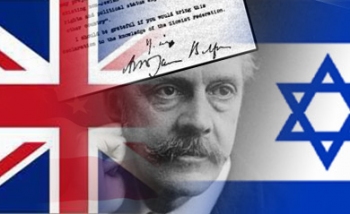
Britain, It’s Time To Apologise Campaign kicks off
An International Campaign, “Britain, It’s Time To Apologise” was launched on 8th Feb. 2013 in Britain by the Palestinian Return Center (PRC).
It’s nearly 100 years since the UK Foreign Secretary, Arthur James Balfour, pronounced the Balfour Declaration, on 2nd November 1917, promising a homeland for the Jews in Palestine. Ever since, Palestinians have suffered tremendously under the shadow of Britain’s colonial past.
The Palestinian Return Centre (PRC), with other partners around the world, will join efforts over the next five years to mobilize people to support the campaign. It will gather a million signatures from those seeking justice in Palestine, in condemnation of British colonial policy between 1917-1948.
The campaign seeks to focus global attention on British legacy in Palestine and galvanize international support for an apology from Britain over its grave mistakes in Palestine.
The campaign aims to collect one million signatures to demonstrate the international appetite for addressing historical crimes committed in Palestine and make specific demands for an apology and restoration of past injustices.
Over 11 million Palestinians continue to suffer from the unjust and misguided British policy in Palestine.
The five year campaign will include mass mobilization, popular events, conferences and workshops, lobbying, petition and many other initiatives.
Sign and Join the Campaign now:
http://balfourcampaign.com/en/index.php?option=com_wrapper&view=wrapper&Itemid=7&test=10
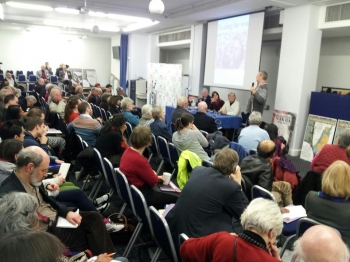
Fourth Palestine Memorial Week launched, Five year Balfour Campaign initiated
The Palestinian Return Centre (PRC), launched its five year Balfour Campaign during its annual conference in London.he Palestinian Return Centre (PRC).
It also commenced the 4th Palestine Memorial Week in the United Kingdom where a number of events are due to take place.
An international Conference was held on the 19th of Jan 2013 which was the launchpad of a week events around UK.
The conference was titled, “Britain’s Legacy in Palestine” and witnessed the inauguration of a five-year Balfour Campaign.The Saturday’s conference gathered MPs, academics, experts, activists and people from the general public to hear about Britain’s Legacy in Palestine.
The Eight hour conference provided details of Britain’s disastrous policy in Palestine and a blueprint for its success.
The campaign calls on Britain to apologise for its historical mistake and make reparations to Palestinians who endured human rights at British hands.
According to Nasim Ahmed, conference chair, Britain’s historical footprint in Palestine is fossilised for centuries.
“Britain has left an indelible mark on Palestine and its disastrous repercussions are still felt now. In enforcing the Balfour Declaration, Britain sold out human right, self determination and representative government to privilege, not just a small Jewish community in Palestine but Zionism, which, just as significant, was a minority movement within the Jewish tradition itself.” Stated Ahmed
The case of the recent Mau Mau legal battle for compensation was presented and broached as a framework that could be developed and used for Palestinians.
The two morning sessions looked in detail at the motivations and political considerations that lead to the Balfour Declaration. In the two afternoon sessions, four different presentations provided many ideas on developing a five year campaign, which at its core was about restoration for historical injustice.
Main speakers were Prof Manuel Hassassian, Palestinian Ambassador to the UK, Dr Uri Davies (Academic and a civil rights activist), Dr. Alison Weir, Journalist and Activist, Director of If Americans Knew, Alan Hart. Renowned British Journalist and author, John Bond (British Australian activist who lead the Australian national sorry campaign), Rev Dr Stephen Sizer (British Author Activist and Incumbent of the Anglican Parish of Christ Church), Former British MP, Martin Linton, Maria Holt, Senior Lecturer in the Democracy and Islam Program at Westminster University, Mohammad Al Hamid, Head of PRC Board of Trustees, Dr Ghada Karmi, Writer/Academic and Activist, Daud Abdullah, Director of Middle East Media Mentoring (MEMO) and Sabah Al Mokhtar, President of Arab Lawyer Association
PRC is hopeful that the Balfour campaign will gather momentum over the coming months and years. It is encouraged by others who have launched similar campaigns. It hopes that with enough coordination and energy, it will galvanise people around the world and develop the support and mechanisms to judge Britain through the court of public opinion and more.
The memorial week will include a number of events across different universities in the UK, including the University of Greenwich, Imperial College, Kings College and Brunel University
A film screening highlighting the plight of Palestinian Refugees from Iraq titled, “Displaced in Diaspora” will be shown on 25 January 2013 from 6:30PM to 9:00PM. Event venue for the screening is: Hend House, 233 Shaftesbury Avenue, London, WC2H 8EH
International Conference: Britain’s Legacy in Palestine
The Palestinian Return Centre (PRC) will be hosting an international conference on Britain’s colonial legacy in Palestine.
It will inaugurate the fourth Palestine Memorial Week which will start from 19th-25th Jan 2013, and be the formal launching pad for International Balfour Campaign, which is a five year initiative by the PRC to mark the centenary of the Balfour Declaration. The PRC believes that there needs to be a well intentioned and meaningful conversation about Britain’s colonial past in the context of Palestine, especially as thousands who suffered under British administration are still alive and many millions continue to endure terrible offences as a result of Britain’s failed policy in the region.The conference is scheduled for Saturday 19 January 2013, from 9:30am to 17:00 PM at Friends House, 173 Euston Road London NW1 2BJ. The following sessions and speakers are confirmed: —————————————————————–========================Session 1: The Early History• The Theological and Ideological Roots of the Belfour Declaration • British Policy in Palestine • Israel continues Britain’s colonial Legacy in Palestine ========================Session 2: British Legacy in Palestine• Ethnic cleansing of Palestine: Same goal different model • Living Under occupation, the mechanics of ongoing ethnic cleaning ========================Session 3: The African Mau Mau case & Britain – A comparative Review• Australia’s National Sorry Day, lessons to be learnt • Why Mau Mau Matters to Palestine • The Legal framework of the Mau Mau Case and its implications for Palestinians =========================
Session 3:
Lessons and Conclusions
=========================Confirmed Speakers:=========================• Rev Dr Stephen Sizer (British Author Activist and Incumbent of the Anglican Parish of Christ Church)• Dr Uri Davies (Academic and a civil rights activist)• John Bond (British Australian activist who lead the Australian national sorry campaign)• Mohammed Othman (Palestinian civil right activist freed from Israeli detention after international campaign)More speakers will be confirmed over the coming weeks.——————————————————————-The memorial week will include a number of events across the University of Greenwich, Kings College, Burnel University and others. A film screening that underlines that suffering of Palestinian Refugees in Iraq titled, “Displaced in Diaspora” will be shown on the 25th January 2013 from 6:30PM to 9:00PM, in presence of film critics and representatives of Aljazeera News Network, venue of the event will be: Hend House, 233 Shaftesbury Avenue, London, WC2H 8EEH To participate cal and reserve your seat on: info@prc.org.uk or 02084530919, Refreshments will be served in both events. For further details visit our website:www.prc.org.uk
Meeting at British Parliament: Britain, It’s Time To Apologise, International Balfour Campaign
The Palestinian Return Centre (PRC) is organizing a seminar at the British parliament to mark the 96th anniversary of Balfour declaration and provide an update on our campaign “Britain, It’s Time To Apologize, International Balfour Campaign”
The seminar will take place on Monday, 4th of November 2013, at Houses of Parliament, Portcullis House, Wilson Room, from 6:30 to 8:30 pm. It will be hosted by Jeremy Corbyn MP.Palestinian Ambassador in Britain, Manuel Hassassian, will be a key speaker at the event. The three signatories of the campaign Baroness Jenny Tonge, Lord Ahmed Nazir, Jeremy Corbyn MP, will also be speaking at the event. Sameh Habeeb, head of PRC media department and the coordinator for the campaign in Europe will join the panelist. A number of other MPs, politicians and activists will also speak. PRC with other partners around the world collected thousands of emails in its global campaign to mark the centenary of the Balfour Declaration.The campaign will run for five years to galvanize international support in seeking an apology from British authorities, for the many human rights violations in Palestine during British Mandate. General Director of PRC and the campaign general coordinator Majed Alzeer stated that activities of the campaign are expanding and more politicians and decision makers are joining, in Britain and worldwide. Alzeer called on all organisations working for Palestine to join the campaign as equal partners.Meanwhile, Campaign coordinator in the Arab region, Ali Hewidi, added that there is great momentum for the campaign across the many communities of Palestinian people as well as Arabs. Hewidi said that key Lebanese politician, former PM, Selim al-Hoss signed and joined the campaign.If you are interested in taking part book your seat by email: events@prc.org.uk or 02084530919
The Palestinian Return Centre (PRC) is organizing a seminar at the British parliament to mark the 96th anniversary of Balfour declaration and provide an update on our campaign “Britain, It’s Time To Apologize, International Balfour Campaign”
The seminar will take place on Monday, 4th of November 2013, at Houses of Parliament, Portcullis House, Wilson Room, from 6:30 to 8:30 pm. It will be hosted by Jeremy Corbyn MP.
Palestinian Ambassador in Britain, Manuel Hassassian, will be a key speaker at the event. The three signatories of the campaign Baroness Jenny Tonge, Lord Ahmed Nazir, Jeremy Corbyn MP, will also be speaking at the event. Sameh Habeeb, head of PRC media department and the coordinator for the campaign in Europe will join the panelist. A number of other MPs, politicians and activists will also speak.
PRC with other partners around the world collected thousands of emails in its global campaign to mark the centenary of the Balfour Declaration.
The campaign will run for five years to galvanize international support in seeking an apology from British authorities, for the many human rights violations in Palestine during British Mandate.
General Director of PRC and the campaign general coordinator Majed Alzeer stated that activities of the campaign are expanding and more politicians and decision makers are joining, in Britain and worldwide. Alzeer called on all organisations working for Palestine to join the campaign as equal partners.
Meanwhile, Campaign coordinator in the Arab region, Ali Hewidi, added that there is great momentum for the campaign across the many communities of Palestinian people as well as Arabs. Hewidi said that key Lebanese politician, former PM, Selim al-Hoss signed and joined the campaign.
If you are interested in taking part book your seat by email: events@prc.org.uk or 02084530919