PRC Hosts In-Depth Panel on 107 Years of Balfour Declaration’s Impact on Palestine
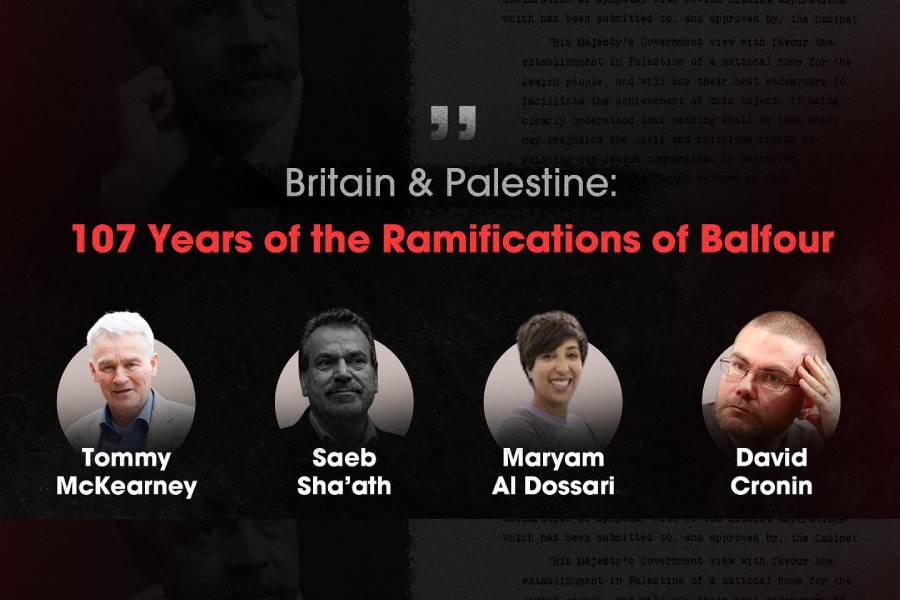
The Palestinian Return Centre (PRC) recently hosted a virtual panel discussion titled “Britain and Palestine: 107 Years of the Ramifications of Balfour,” bringing together distinguished voices to explore the lasting impacts of the Balfour Declaration on Palestinian rights, British colonialism, and ongoing global ramifications. Moderated by activist Farrah Kouteineh, the event featured renowned speakers including Irish socialist and human rights advocate Tommy McKearney, political expert Saeb Shaath, investigative journalist David Cronin, and human rights advocate Maryam Al Dossari.
The speakers provided insightful analysis and engaged in critical reflection on the declaration’s legacy, detailing how it set a foundation for systemic oppression that still affects Palestinians today. The discussion was enriched by a thorough examination of historical resistance movements, the British colonial strategy, and international policies toward Palestine.
The panel opened with David Cronin, an acclaimed Irish journalist and editor with The Electronic Intifada, who is also the author of Balfour’s Shadow: A Century of British Support for Zionism and Israel. Cronin examined the Balfour Declaration as a deliberate political move that disregarded Palestinian self-determination, paving the way for the systematic disenfranchisement of the Palestinian people. He traced how British support evolved into full-scale assistance, pointing out that Britain’s strategic decisions during its mandate in Palestine created conditions for the mass displacement of Palestinians. Cronin also highlighted recent media silence on Britain’s ongoing role, including surveillance operations over Gaza, revealing the extent of complicity and reinforcing the urgent need for accountability.
Following Cronin, Saeb Shaath, a Middle Eastern political expert, former Palestinian diplomat, and co-founder of Irish Medical Aid for Palestine, presented a detailed historical account of settler colonialism, positioning Zionism within a broader context of imperialism that had its roots in British colonial strategies tested first in Ireland. Shaath explained that the British mandate built political structures to support Zionist settlement, a form of colonialism intended to dispossess and replace indigenous Palestinians. Shaath called for legal accountability for British and Western leaders involved in sustaining policies that continue to oppress Palestinians.
Tommy McKearney, an Irish socialist, former IRA member, and lifelong human rights activist, shared his insights on parallels between British colonial practices in Ireland and Palestine. Drawing from his personal experiences, McKearney discussed how the British Empire historically used settler-colonial tactics to create divisions, an approach also applied in Palestine to establish control over strategic regions. McKearney emphasized that Britain’s and the U.S.’s continued support for Israel, as a colonial outpost in the Middle East, mirrors the imperial intentions seen in Northern Ireland, asserting that the “divide and rule” strategy is designed to keep colonizers and native populations at odds to benefit imperial interests. He predicted that without imperial support, Israel could eventually face a fate similar to that of the British presence in Northern Ireland.
The final speaker, Maryam Al Dossari, a human rights advocate, highlighted the direct human impact of British and Zionist policies on Palestinian communities. Al Dossari focused on the ongoing humanitarian crises in Gaza and the West Bank, pointing to the daily challenges Palestinians face under occupation, including home demolitions, restricted access to essential resources, and an overall erosion of rights. She urged the international community to recognize and address the humanitarian toll of these policies, describing the suffering of Palestinian families as a tragic consequence of colonial ambitions that began with the Balfour Declaration.
During the Q&A, the panelists addressed Britain’s current involvement in the crisis, notably its provision of military and surveillance support to Israel. They also discussed Ireland’s solidarity with Palestine, while critiquing the Irish government for its limited action in enforcing policies that would effectively counter the Israeli occupation. Cronin and Shaath highlighted recent discoveries of Irish airspace being used to transport munitions to Israel, revealing the depth of Western complicity in what the panelists described as “a modern-day genocide.”
The PRC emphasized the need for awareness, advocacy, and legal accountability. The organization encourages the public to engage with their efforts by following PRC on social media and supporting upcoming events aimed at amplifying Palestinian voices and advocating for justice.
Watch the discussion
PRC Holds Webinar on Legacy of Balfour Declaration
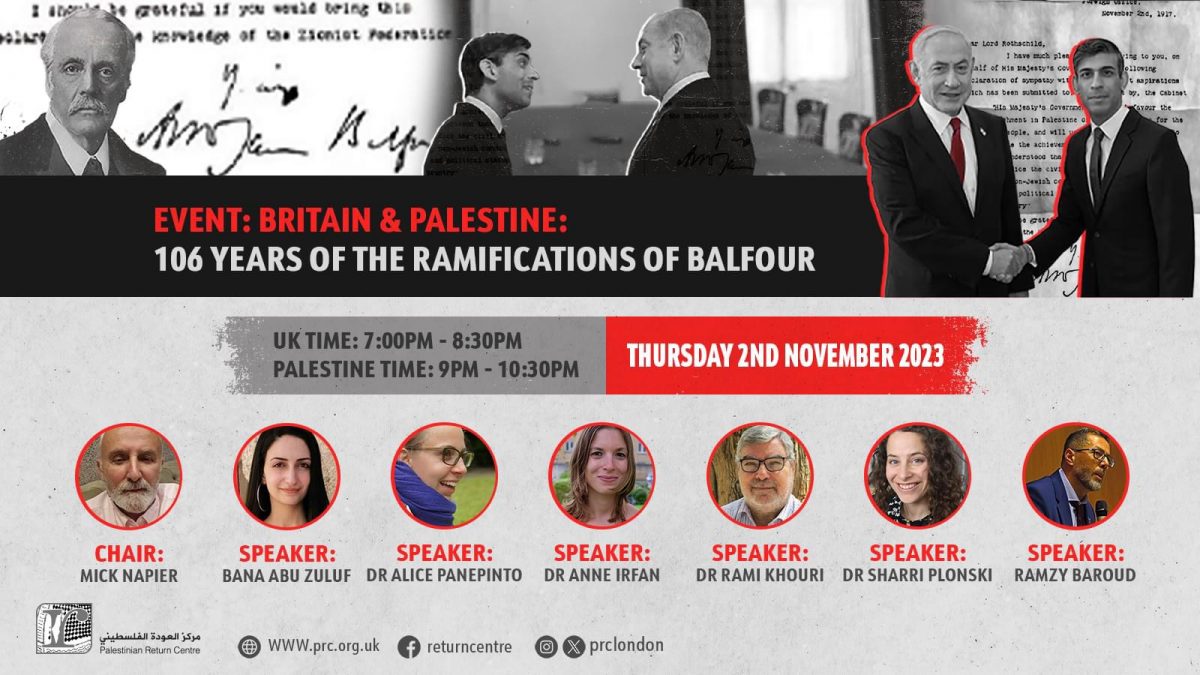
The Palestinian Return Centre (PRC) in London hosted a webinar entitled “Britian&Palestine: 106 Years of the Ramifications of Balfour”.
The panel discussion was chaired by Mick Napier, from Scottish Palestine Solidarity Campaign.
The first speaker was Alice Panepinto, a reader at the School of Law. She joined QUB as a Lecturer in law in 2017 and became a Senior Lecturer in 2021. Prior to joining QUB Alice worked at Warwick University and outside academia on human rights and international law issues in the Middle East. She holds a PhD in law and a Postgraduate Certificate in Academic Practice from Durham University, an LLM from SOAS, and a law degree from Turin University. Alice researches international law, human rights and transitional justice, with a regional interest in the Middle East.
Alice pointed out to the ways the Balfour Declaration turned British imperialism in Palestine into a Zionist project endorsed by the international community.
She said British colonialism is the basis for Palestinian dispossession. “Without British colonialism and without British power, the situation in the world would not be as it is”.
Alice stressed that Balfour began as a British project and lives on as a dogma of the international community. Describing the mindset of the Declaration, she said it is “arrogant, dismissive and even racist”.
She added that the British-brokered dispossession aimed to substitute the Palestinian natives with the Zionist. Palestinian Arabs were not given access to any significant positions of authority in the British mandatory government; Neither were they given the right to create their own powerful, autonomous state.
The second speaker was Bana Abu Zuluf, a PhD Researcher in International Law at NUIM, Ireland. Bana is a researcher and community activist with the Good Shepherd Collective. She played a crucial role in developing the Campaign to Defund Racism – designed to organize over 200 Palestinian organizations, villages and individuals from across historic Palestine – to stop the flow of charitable money to Israeli settler organizations.
Her presentation tackled the implications of the Zionist colonization of Palestine from 1948 till the present day.
She said the Balfour Declaration of 1917 not only triggered the Zionist colonization but also the Nakba, in reference to the disaster that befell the Palestinian people in 1948, when around 750,000 Palestinians were expelled out of their land, forcing them to leave behind hundreds of destroyed towns and villages.
Bana took the audience back to the late 1930s, when British military trained Zionists in Palestine (approximately 5,500) in guerilla and counter insurgency warfare.
“Today, the British government provides Israel with hundreds of millions of pounds in arms, ranging from aircrafts, helicopters, drones, bombs, missiles, military technology, armoured vehicles, tanks, ammunition, and small arm”, said Bana.
In her view, ignoring the underlying causes of Palestinian dispossession and oppression effectively denies them the agency to alleviate it: “By refusing to recognize Palestinian right to self-determination and providing only passive assistance through humanitarian aid, the British government cements the status of Palestinians as a subordinate group who receive conditional support upon their acceptance of the ‘two-state’ solution and the larger status quo of the Israeli dominance and ethnic cleansing.”
“This forced attachment of humanitarian aid in statements by British politicians about the slaughter in Gaza shows clearly the erroneous logic by which humanitarian support becomes inhumane and by which the British government holds on for dear life their British colonial legacy in Palestine”, she further stated.
On board was also Sharri Plonski, a senior lecturer in international politics at Queen Mary University of London. She is a product of multiple transgenerational colonialities that link the practices of conquest, empire, settlement and migration in Eastern Europe, Palestine, Canada and the UK. Her work, which is concerned with settler colonial relations, anti-colonial struggles, border dynamics and material infrastructures, is primarily anchored in the case of Palestine/Israel and its regional and global relations. She is currently working on a project that investigates the colonial and capitalist entanglements of Israel’s trade and transit infrastructures (as PI on an ESRC New Investigator Grant) and the materials that undergird Israel’s ‘normalisation’ project.
Sharri expressed her dismay at what is going on in the besieged Gaza Strip, saying: “Every morning I’m scrolling through images of rubble”.
She also voiced her deep shock at the UK government’s response to Israel’s expansionist project and the ongoing genocide in Gaza.
Sharri tackled the normalization ties between Israel and the Gulf states in the area of culture, politics, tourism, and economy and how those deals helped nurture Israel’s ethnic cleansing and colonialist project.
The final speaker was Rami G. Khouri, director of global engagement at the American University of Beirut, a nonresident senior fellow at the Harvard Kennedy School Middle East Initiative, and an internationally syndicated columnist.
Rami highlighted how the principles outlining the Zionist movement have been active for the last century, pointing out to Israel’s destructive politics, material criminality, and the continuous use of violence and military power in an attempt to drive Palestinians out of their land.
In Rami’s words, the process of creating a Jewish state on Palestinian land could only happen with the collusion and direct involvement of the British colonial power, a project which is now being expanded by the United States.
The panel discussion emphasised that Britain’s role was essential to the establishment of the State of Israel, and by extension, Britain bears responsibility for the terror that ensued during the Nakba, as well as the structure of Apartheid that Israel still operates on until this day. Britain’s current friendliness with the State of Israel is a continuation of Balfour and its historic nurturing of the Zionist movement.
Britain’s support of the Zionist movement set the ground works for the Nakba, and its continued support of the State of Israel enables its policy of Apartheid. However, the Zionist movement was met with resistance and continues to be met with resistance by the Palestinians.
Palestinian Return Centre hosts ‘105 Years of Balfour: Britain in Palestine & Ireland’ to mark 105th anniversary of the Balfour Declaration
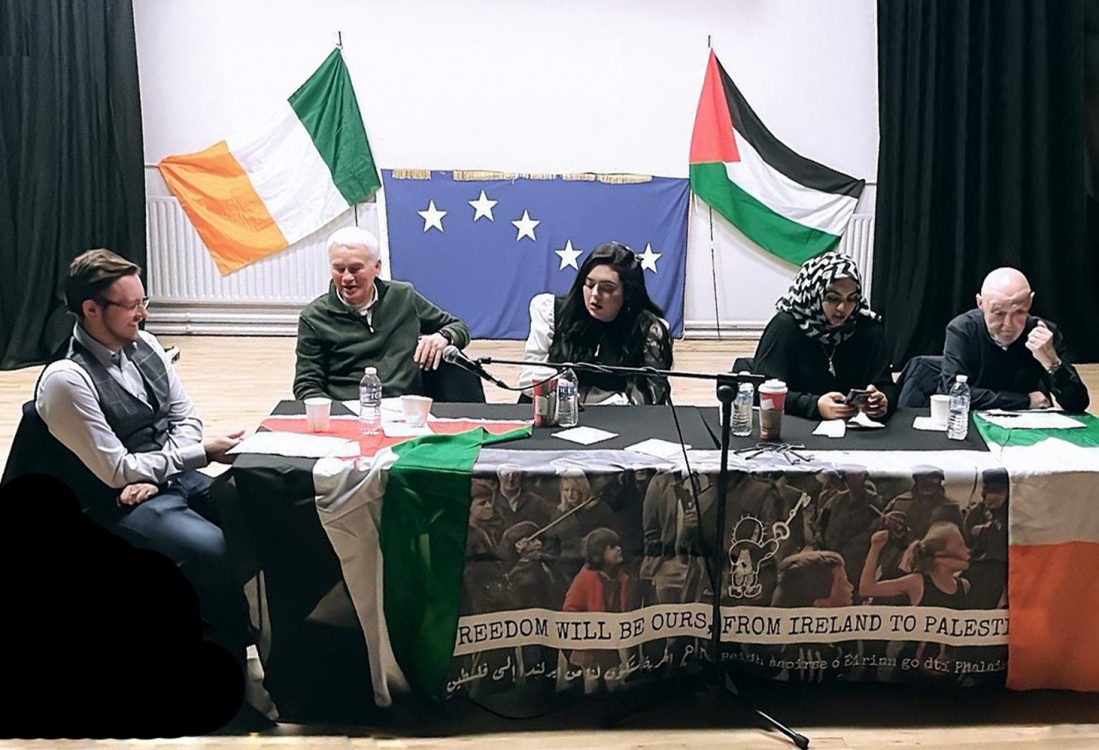
The Palestinian Return Centre organised and hosted a panel discussion entitled ‘105 Years of Balfour: Britain in Palestine & Ireland’ to mark 105th anniversary of the Balfour Declaration on the Friday 4th November at the Cultúrlann McAdam Ó Fiaich in Belfast, Ireland.
The panel discussion was chaired by James McCarthy, a journalist with the Andersontown News, who introduced the first speaker, Farrah Koutteineh. Ms Koutteineh spoke on behalf of the Palestinian Return Centre, engaging the audience with the role the British mandate undertook during their mandate era between 1918-1948, from assisting zionist militant groups with forced expulsions of Palestinian cities and towns, to the British actively attempting to crush Palestinian dissent to the mandate and partition. Ms Koutteineh mentioned how the Balfour Declaration marked the beginning of 105 years of British collusion in the colonisation of Palestine, and how Britain was complicit in its ethnic cleansing from its brutal mandate era to the Balfour declaration itself. She wrapped up her speech emphasising the urgency of the Palestinian right of return, as Palestinian refugees continue to languish in refugee camps unfit for human habitation.
The panel discussion then heard from Pat Torley, currently the Vice Chairman of the Belfast branch of the Communist Party of Ireland, after spending several years organising in Trade Unions, he has sat on the Irish regional committee and chaired the Belfast Workers District Committee for NI Water.
Mr Torley opened his speech with talking on the parallels between British forge inflicted on both Ireland & Palestine. From the actions of the British ‘Black and Tans’ to the partition of both countries. He then mentioned the ‘Criminal Law and Procedure (Ireland) Act’ 1887, which was passed by Balfour to have more power in Ireland and to be able to crush any dissent or resistant to British rule of the island. Mr Torley closed on highlighting how Balfour because the ‘Chief Secretary for Ireland’ where he is known to have orchestrated the Mitchelstown Massacre against Irish civilians, giving him the name ‘Bloody Balfour’.
The conference then heard from Latifa Abouchakra, a Palestinian refugee who came to the UK during her primary school years. She resides in London, where she has completed her Law degree at Kingston University and went on to complete her PGCE at UCL. She is now a secondary Citizenship and PSHE teacher, investigative Reporter and a Trade Unionist. She has used her platform in the Nation Education Union to stand up against racist policies in the UK; most notably within education against the hijab ban attempted via Ofsted and Prevent.
Ms Abouchakra began her speech with mentioning how the Balfour Declaration symbolised to Palestinians the beginning of the destruction of their homeland. She condemned the British governments repeated celebrations of the Balfour Declarations at the taxpayers expense, and demanded the British government formally apologise for the declaration. Ms Abouchakra then spoke on the stances of all three British prime ministers who have taken power this year, and how their unwavering support of Israel and self identification as zionists is morally reprehensible.
The final speaker of the evening was Tommy McKearney, a former Irish political prisoner, hunger striker spending 53 days on hunger strike, and today is an active trade unionist, author and activist.
Mr McKearney opened up the final speech of the evening delving into the history of Palestine before Balfour, the actions of Sykes Picot and their role in the Middle East and how the impacts of British imperialism where felt all around the world from Ireland to Palestine. He spoke on the British colonial and imperialist strategy that fuelled Britain’s violence in Ireland and Palestine in the early 20th century, as Britain wanted its influence spread far and wide. He then delved into the connections of oppression between Britain and America when it comes to the oppression of Palestinians.
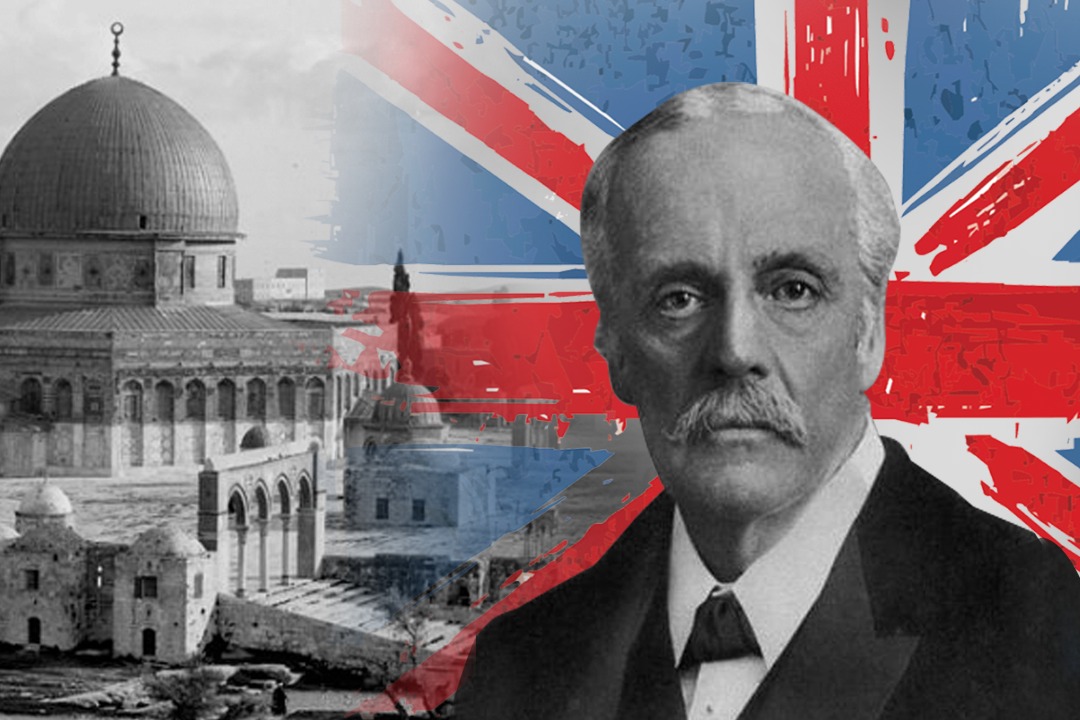
105 Years On, Britain Still Responsible for Tragic Consequences of Balfour Declaration
The Palestinian Return Centre (PRC) in London released a press statement on the 105th anniversary of the Balfour Declaration, issued on November 2, 1917, and which turned the Zionist aim of establishing a Jewish state in Palestine into a reality when Britain publicly pledged to establish “a national home for the Jewish people” there.
More than a century on, millions of Palestinian refugees continue to grapple with the devastating upshots of the Balfour Declaration, which led to a significant upheaval in the lives of Palestinians.
The pledge came in the form of a letter from Britain’s then-foreign secretary, Arthur Balfour, addressed to Lionel Walter Rothschild, a figurehead of the British Jewish community.
Though the Balfour Declaration included the admonition that “nothing shall be done which may prejudice the civil and religious rights of existing non-Jewish communities in Palestine”, the British mandate was set up in a way to equip Jews with the tools to establish self-rule, at the expense of the Palestinian Arabs.
The efforts made by PRC in this regard have been on the go over recent years to urge Britain to apologize to the Palestinians for the tragedy that has befallen them as a result of the Balfour Declaration.
The Balfour Apology Campaign (BAC), kick-started by PRC nine years ago, falls within the above context as it matches ongoing endeavors to hold Britain historically, morally, and politically accountable for the dispossession and displacement of 750,000 civilians from their own and only homeland—Palestine—to give way for the establishment of the self-proclaimed state of Israel.
As a result, nearly 7 million Palestine refugees have become scattered all over the world, torn from the nourishment of home and the warmth of family.
The tragic consequences of the pledge continue to plague the lives of the Palestinians till the moment of writing. So far this year, 120 Palestinians have been killed by Israeli forces. Hundreds more have been subjected to arbitrary arrests, racist practices, forced displacement, and house demolitions.
Desperation is mounting, especially among young Palestinian refugees and asylum seekers across the Middle East and in other parts of the world. They are confronted with poverty, unemployment, and a general lack of prospect. Some are risking their lives in search of a more dignified life.
In Gaza, Lebanon and Syria, over 80 percent live below the poverty line.
The British government should officially apologize to the Palestinians over this shameful declaration which led to an unprecedented infringement of the rights of of Palestinians.
At the same time, the UK government should not adopt the position of former Prime Minister Liz Truss, who planned to move the UK embassy to Jerusalem.
Britain bears a moral and historical responsibility over the displacement and dispossession of millions of Palestinians and should therefore make every possible effort to remedy the wounds inflicted upon the Palestinians as a result of the pledge.
The international community should also speak up for the rights of the Palestinians to establish an independent Palestinian State on the 1967 borders and the rights of millions of refugees to return to their homeland. The Israeli occupation should be brought to an end and Israel should be held accountable for its war crimes and crimes against humanity.
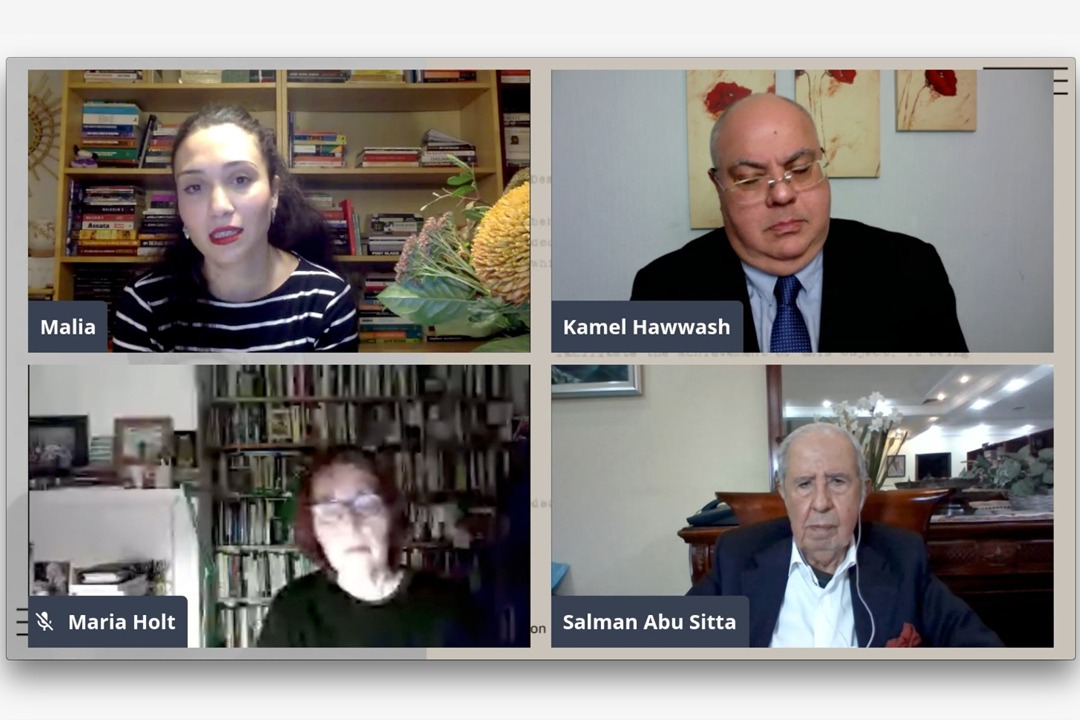
“Britain & Palestine: Balfour to Boris” Webinar Raises Alarm over Upshots of Balfour Declaration
A webinar was hosted by the Palestinian Return Centre (PRC) on Monday 2nd November, 2020, from 7pm to 8:30pm, via Zoom video call to mark the 103rd anniversary of the Balfour Declaration.
Entitled “Britain & Palestine: Balfour to Boris”, the webinar underscored the tragic impact of the Balfour Declaration on Palestinian human rights for over a century, from 1917, when the notorious pledge saw the day, until the present moment.
The Webinar was chaired by Professor Kamel Hawwash, a British-Palestinian academic and writer. He is also the Chair of the Palestine Solidarity Campaign and a founding member of the British Palestinian Policy Council.
In his opening address, Mr. Hawwash introduced the Webinar’s first speaker, Dr Salman Abu Sitta, a Palestinian researcher most known for his ground-breaking mapping project on Palestine in the 21st, 20th and 19th centuries and for developing a practical plan for exercising the Palestinian right of return.
In his oral contribution, Dr. Abu Sitta focused on the history of the Balfour Declaration and the British colonial complicity in the ethnic cleansing, land theft and colonisation of Palestine, which had paved the way for the creation of Israel.
The second speaker was Dr. Maria Holt, a Senior Lecturer in the Department of Politics and International Relations at the University of Westminster. An outspoken political lobbyist and a parliamentary researcher specialising in the Middle East, Ms. Holt highlighted the devastating impact of the Balfour Declaration, saying the 103rd anniversary of the Declaration only serves as a stark reminder for the international community to speak up so loud for the Palestinian refugees’ plight and for their inalienable right of return to their homeland.
The discussion was wrapped up by a thorough contribution by activist Malia Bouattia—the former president of the National Union of Students, co-founder of the Students not Suspects/Educators not Informants Network, and presenter/panelist of British Muslim TV’s revolutionary talk show “Women Like Us”.
Ms. Bouattia’s speech covered the implication of the Balfour Declaration in terms of the geopolitical self-interests of colonial and imperialist powers back in 1917 up to the present decade.
“This is as much about freeing Palestine as it is about ending British and western imperialism”, stated Ms. Bouattia, as she unraveled her wish that the British government would assume its responsibility for the repercussions of the 1917 pledge, which she said was just one branch of Britain’s imperialistic tree.
The webinar culminated in a consensus that current British Government is historically, morally, and politically compelled to apologise for the Balfour Declaration and sever all diplomatic ties with Israel until the military occupation of Palestine is brought to a halt, international law is observed, and Palestinian refugees’ right of return materializes on the ground.
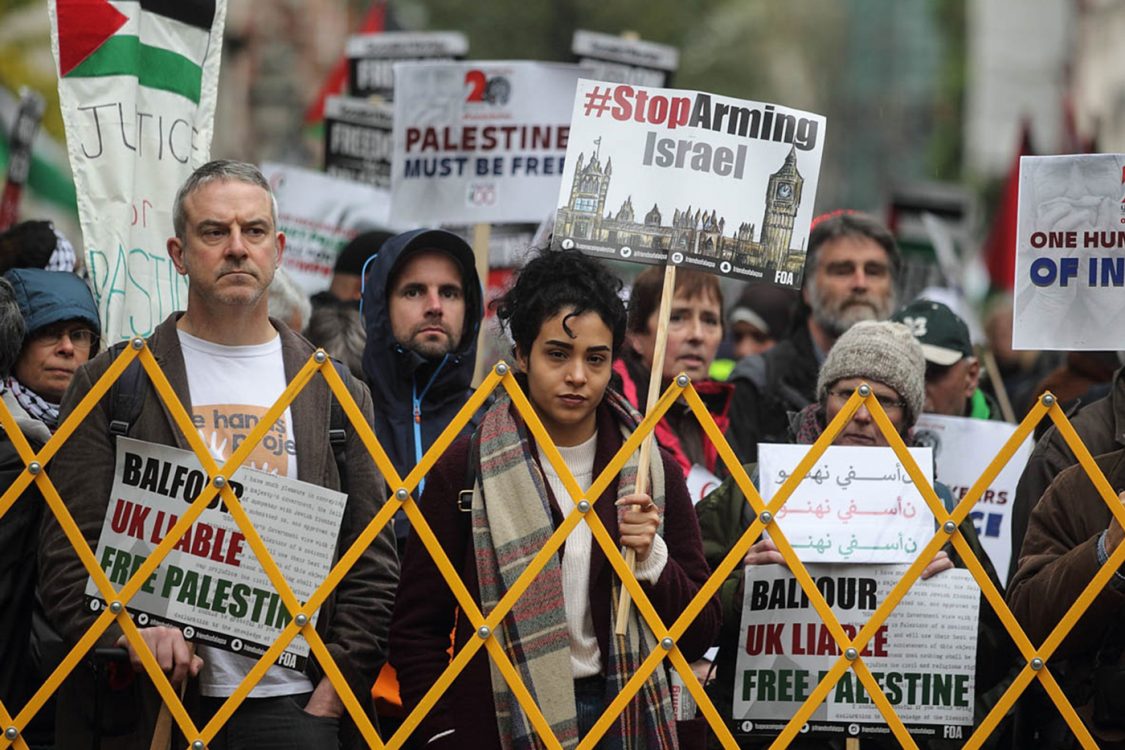
PRC Actively Engaged in Balfour Apology Campaign for 6th Year Running
As the fallouts of the notorious Balfour Declaration, made in 1917, continues to ruin Palestinians’ present and future as an incurable cancer does a man’s vulnerable body, efforts have been under full swing to urge Britain to make an official apology to the affected peoples, particularly, but not exclusively, the Palestinians.
Though an apology never ends up healing the grave wounds inflicted on a people’s memory and history, it is, nonetheless, a moral, historical, and historical debt that the “offender” owes to the “victim.”
The efforts made by the London-based Palestinian Return Centre (PRC) in this regard have been on the go over recent years to urge Britain to apologize to the Palestinians for the tragedy that has befallen them as a result of the Balfour Declaration, a letter sent by the UK’s Foreign Secretary Arthur Balfour to Lord Rothschild, a leader of the British Jewish Community, green-lighting the establishment in Palestine of a national home for the Jewish people.
The Balfour Apology Campaign (BAC), kick-started by PRC some six years ago, falls exactly within the above context as it matches ongoing endeavors to hold Britain historically, morally, and politically accountable for the dispossession and displacement of 750,000 civilians from their own and only homeland—Palestine—to give way for the establishment of the self-proclaimed state of Israel.
As a result, nearly 7 million Palestine refugees have become scattered all over the world, torn from the nourishment of home and the warmth of family.
Ever since the pledge saw the day, the Palestinians have seen it all. Extrajudicial murders, mass genocides, arbitrary abductions, administrative detention (sentence with neither charge nor trial), racial discrimination, religious persecution, and home demolitions, among dozens of other internationally-condemned crimes, have been among the violations perpetrated by the Israeli occupation forces and authorities against the Palestinian people.
At the same time, an eleven-year-long blockade on the Gaza Strip has made life quite unbearable in the enclave, turning in it to what has been referred to as the world’s “largest open-air prison”.
The Palestinians have also been denied their basic and most precious rights, namely the internationally-recognized right to self-determination.
Advocacy Mechanisms
A set of tools and mechanisms have been implemented by BAC, which came into being by the end of 2012, in order to step up pressure on the UK government and push it to confess to its historical responsibility over the upshots of the anti-Palestine promise.
Reaching out to a plethora of British and EU diplomats and MPs, PRC has been striving to mobilize worldwide support for the campaign and communicate its demands to official bodies, mainly the British government. Contacts have been held around the clock with NGOs, youth movements, and student events to that very end.
First World War Conference
In 2013, a conference was staged by BAC under the title “The Legacy of Britain in Palestine”. The event spotlighted Britain’s imperialistic history and its ideology-motivated policies in Palestine.
The conference tackled the impacts of the First World War and the repercussions of the ensuing political agreements on Palestinian land and rights.
The conference culminated in a book comprising a bundle of research papers by academics, diplomats, and researchers who took part in the event.
BAC Steps up Pressure
PRC re-introduced the campaign during a seminar hosted by Baroness Jenny Tonge in response to Britain’s attempt to celebrate the centenary of the Balfour Declaration. The seminar was chaired by Lord Norman Warner.
A short movie bearing the title “The Road to Balfour” and released on October 30, 2017, draw the world’s attention to the calamitous repercussions of the Balfour Declaration.
Available in 17 different languages (English, Arabic, Spanish, Danish, Dutch, Swedish, Polish, Italian, Turkish, Hindi, Urdu, Farsi, Chinese, Russian and Indonesian) and broadcast in 25 cities around the globe, the film puts on display the story of a British family who are driven out of their home by the British government and forced to live in a cramped shack in the backyard. Another family—the Smiths—take possession of the house and put down roots in the building, leaving the real house owners—the Johnees—with neither food nor medicines. Heavily-armed soldiers escort the Smiths at the same time as they tighten the noose around the neck of the Johnees and deprive them of their basic rights. The film was premiered inside Queen Elizabeth Hall in London.
An online platform was also launched by BAC campaigners to pass on e-memorandums and give the floor to pro-Palestine activists from around the world to speak up their minds, indirectly address the British government, and urge the Royal Albert Hall to backtrack on its decision to host a centennial celebration of Balfour Declaration.
The move garnered widespread back-up as in no more than three days over 11,000 memos were dropped into the email of Royal Albert Hall.
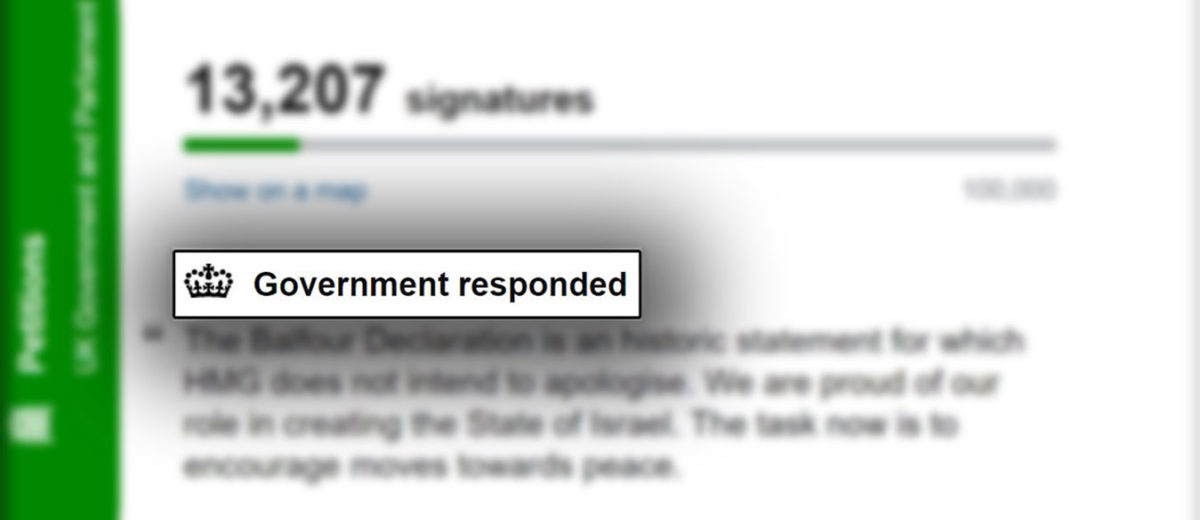
In 2017, an e-petition headed up by PRC and launched on the official website of the British Parliament, attracted fewer than 14,000 signatures by British nationals. Duty-bound to respond to the petition, after it managed to pass the benchmark for an official response, the never-sorry government responded 10 days later, only to confirm that it will not extend any apology over the Balfour pledge.
“The Balfour Declaration is an historic statement for which HMG does not intend to apologize,” the government said at the time. “We are proud of our role in creating the State of Israel. The task now is to encourage moves towards peace.”
A spokesperson said the Declaration was written in a world of “competing imperial powers” as the First World War raged and Ottoman Empire diminished, claiming: “In that context, establishing a homeland for the Jewish people in the land to which they had such strong historical and religious ties was the right and moral thing to do, particularly against the background of centuries of persecution.”
Yet, the Government’s statement accepted that the Declaration “should have called for the protection of political rights of the non-Jewish communities in Palestine, particularly their right to self-determination” but said that lasting peace must now be established through a two-state solution.
The response sparked universal condemnation, with activists and NGOs dubbing it as a sign of Britain’s failure to pay heed to the horrendous crimes committed by Zionist gangs who crept into Palestine during the British Mandate and embarked on systematic massacres and ethnic genocides that brought about the displacement of millions of Palestinians from over 570,000 Palestinian villages in 1948.
As BAC campaigners sought to pass the 100,000 yardstick for a parliament discussion, the parliamentary follow-up committee abruptly altered the cut-off date, reducing it from six months to two months and a half only under the guise that snap elections had been called.
Challenges and Achievements
Over the past six years, BAC has been subjected to ad hominem campaigns waged by the Israeli Lobby.
Baroness Jenny Tonge was made to step down from her post, amid an outcry of her anti-Israel rhetoric. Counterfeit accusations were filed against her by the Israeli Embassy and other pro-Israel media outlets. The accusations were triggered by the event she hosted at the House of Lords that featured critical observations about the Balfour Declaration of 1917, in which the United Kingdom committed to viewing favorably the establishment of a Jewish national home in what would later become the British Mandate on Palestine.
Sometime later, the Parliamentary Committee for Privileges and Conduct dismissed allegations of anti-Semitism against Baroness Jenny Tonge for hosting the launch of the Balfour Apology Campaign on October 25th 2016, in the House of Lords.
It was alleged that Jenny Tonge has breached the Code of Conduct, which requires members to act on their personal honor but the Committee has decreed resounding results, proving that Baroness Tonge did not breach the Code of Conduct in her hosting and chairing of the meeting on the parliamentary estate.
The false accusations of anti-Semitism from the media and the Israeli Embassy were categorically refused by the Committee for Privileges and Conduct, and the investigation refuted as well the claim that the comments made by the member of the Naturei Karta amounted to ‘Holocaust denial’.
In the meantime, dozens of seminars and meetings have been convened by PRC in London and other European cities, in tune with its ceaseless endeavors to speak up for Palestinians’ inalienable rights.
Through its fruitful involvement in the UNHRC’s sessions, PRC has managed to draw the attention of a consortium of NGOs, EU diplomats, prominent activists, and influential high-ranking stakeholders to the intrinsically-monolithic character of the Balfour Declaration—the promise of he who does not own to those who do not deserve it.
PRC:
The Palestinian Return Centre (PRC) is an independent, non-partisan, organization committed to advocating for Palestinian refugees, in accordance with the historical, political and legal basis of the right to return.
PRC educates the public, defends human rights, and empowers Palestinian refugees, in order to put the plight of the refugees back on the political agenda.
Although the PRC is Palestinian in origin, it is not affiliated with any particular organization or party. It works on the assumption that the plight of the Palestinians is not just a national liberation movement but is, in essence, about the core values and ideals that are at the centre of any human civilization and international law.
In July 2015, PRC was granted consultative status at the United Nations as a Non-governmental organization (NGO) in special consultative status with the Economic and Social Council (ECOSOC), in recognition of its efforts in standing up for Palestinian human rights.
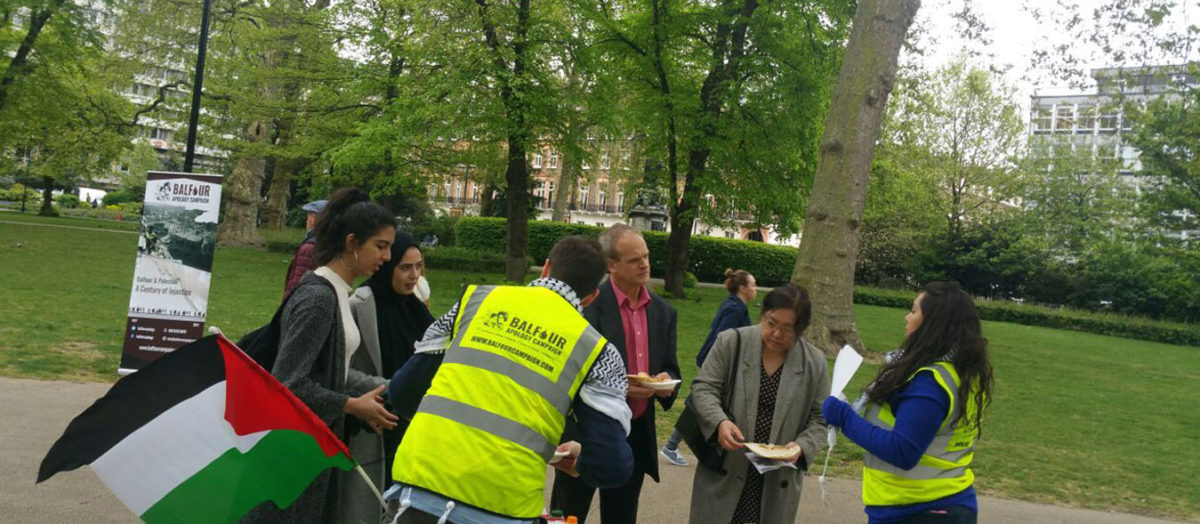
Balfour Petition Continues to Garner Signatures after UK Gov’t Denies Palestinians Apology
London – 24 April 2017
A petition urging the UK government to make an apology over the historical repercussions of the Balfour Declaration continues to garner signatures from the British masses.
The petition, launched by the Palestinian Return Centre (PRC) as part of the Balfour Apology Campaign, has reaped dozens more signatures from students at SOAS University of London, Birkbeck College, and the University College of London (UCL).
A number of students also vowed to volunteer at upcoming events to be initiated at British campuses in order to win over more signatories.
Efforts have also been at top gear by PRC to reach a 100,000-signature threshold in an attempt to make the petition eligible for a House of Commons debate and raise awareness about the domino effects of Britain’s imperialistic history on the Palestinian people.
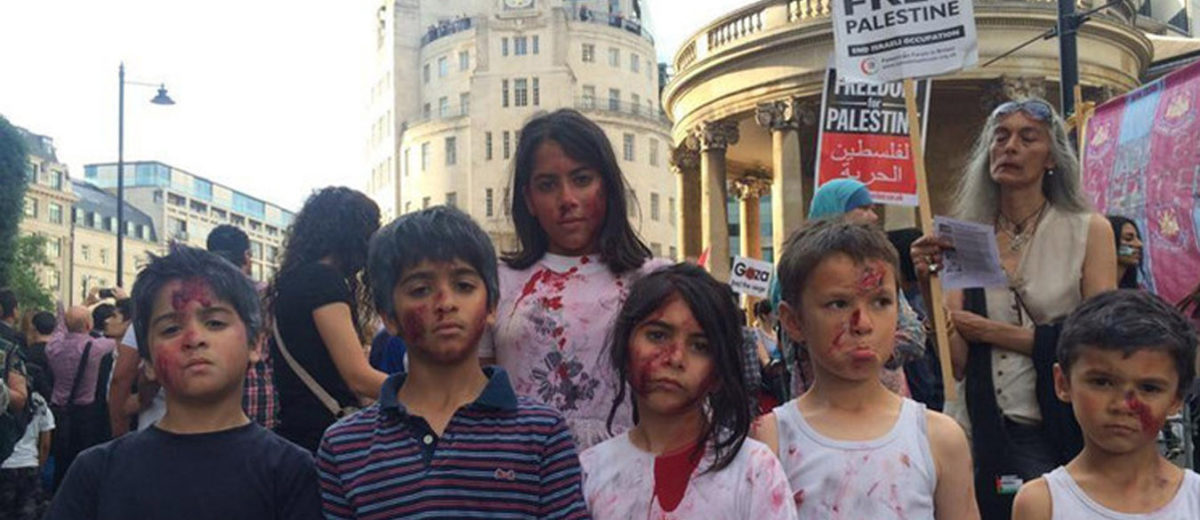
UK Gov’t Claims Partial Responsibility for Tragic Upshots of Balfour Declaration
London, April 23rd 2017
The UK government claimed, in an official response to a petition pushing for an official apology over the Balfour Declaration, partial responsibility for the calamitous repercussions of the pledge on thousands of Palestinians.
“We recognise that the Declaration should have called for the protection of political rights of the non-Jewish communities in Palestine, particularly their right to self-determination,” the statement read.
PRC believes that the statement heralds a turn for the better in the government’s position as regards the Balfour Apology Campaign and signals an act of auto-criticism vis-à-vis the legitimacy of the Palestinian anti-occupation struggle.
The government response, dubbing the Balfour Declaration “an historic statement for which HMG does not intend to apologise” and of which the government is “proud of [its] role in creating the State of Israel” sparked anger among the pro-Palestine masses.
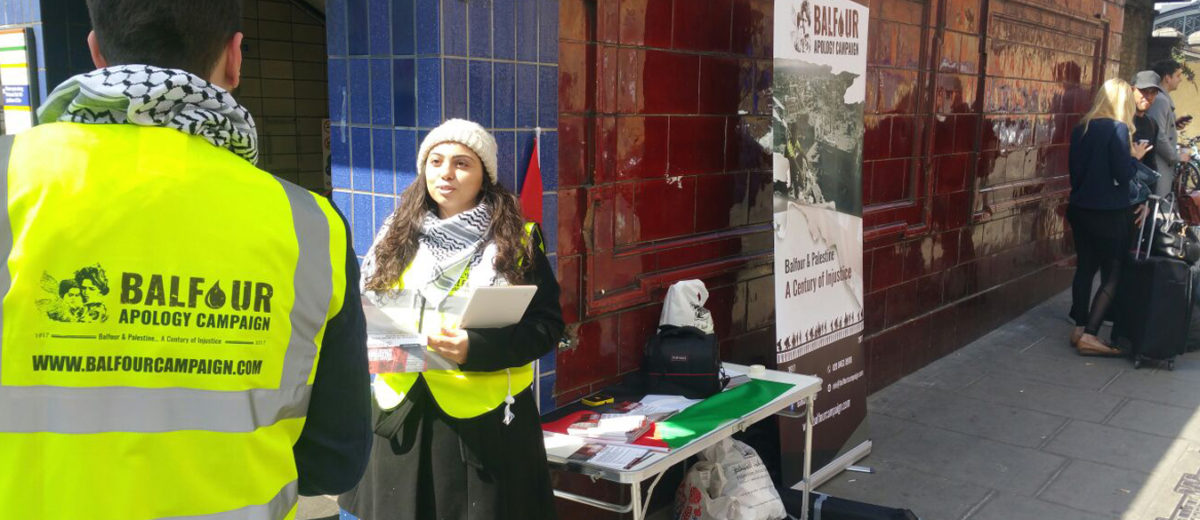
2nd Phase of Balfour Apology Campaign Kicks Off in London Streets
London – 20 April 2017
Advocates of the Balfour Apology Campaign (BAC) took to London streets in an attempt to garner more signatures over a petition urging the UK government to make an apology over the Balfour pledge.
BAC campaigners flocked to Paddington Station, trying to win over thousands of signatures from the masses.
The move comes a few days after the petition received over 12,000 signatures, raising expectations of a gracious apology from the British government.
Efforts have, meanwhile, been in full swing to reach a 100,000-signature threshold in an attempt to make the petition eligible for a House of Commons debate.
The petition makes part of PRC’s underway endeavours to urge the British government to apologise for the tragic upshots of the Balfour pledge and to backtrack on its intent to mark the centenary of the declaration.